Włodawa → Libau → Milwaukee → Oklahoma City → Los Angeles
Nine documented generations — from Herszko of Włodawa on the River Bug, through two steamship crossings out of Libau, a Milwaukee shoe store, sixty-five wig franchises, to three children born at Cedars-Sinai, the fourth generation of the family born there.
0
Documented generations
0
Years, Herszko → Finn
0
Ships out of Libau
0
States settled
For Jaxon, Olive & Finn — the short, short version
A very long time ago, a family named Szumiński lived in a small town called Włodawa, in Poland, right next to a river called the Bug. The oldest one we can prove, a great-great-great-grandfather named Herszko, lived there around 1760.
One of his family, a shoemaker named Max, got on a big ship called the Kursk in 1913 and crossed the whole ocean to America — all by himself. His wife Gitte and his little boys followed the next year, in 1914, just weeks before a big war made it impossible to leave.
The family settled in Milwaukee and opened a shoe store. Later they made wigs too — so many that there were 65 wig stores across the country! Eventually the family moved to Oklahoma, and then to Los Angeles, where you were born.
Nine generations of this family are written down on this website, each one connected to the next by real old documents — some over 250 years old. You're the newest branch. Someday you might read the rest of this page and see just how far back it goes.
Chapter I
The unbroken chain
Tap any generation. Confidence ratings reflect the documents actually in hand — not wishful linking. The chain is anchored at primary-source level from Manel (1811) forward.
c. 1760 · Włodawa
Herszko Szumiński
Named in the 1833 act
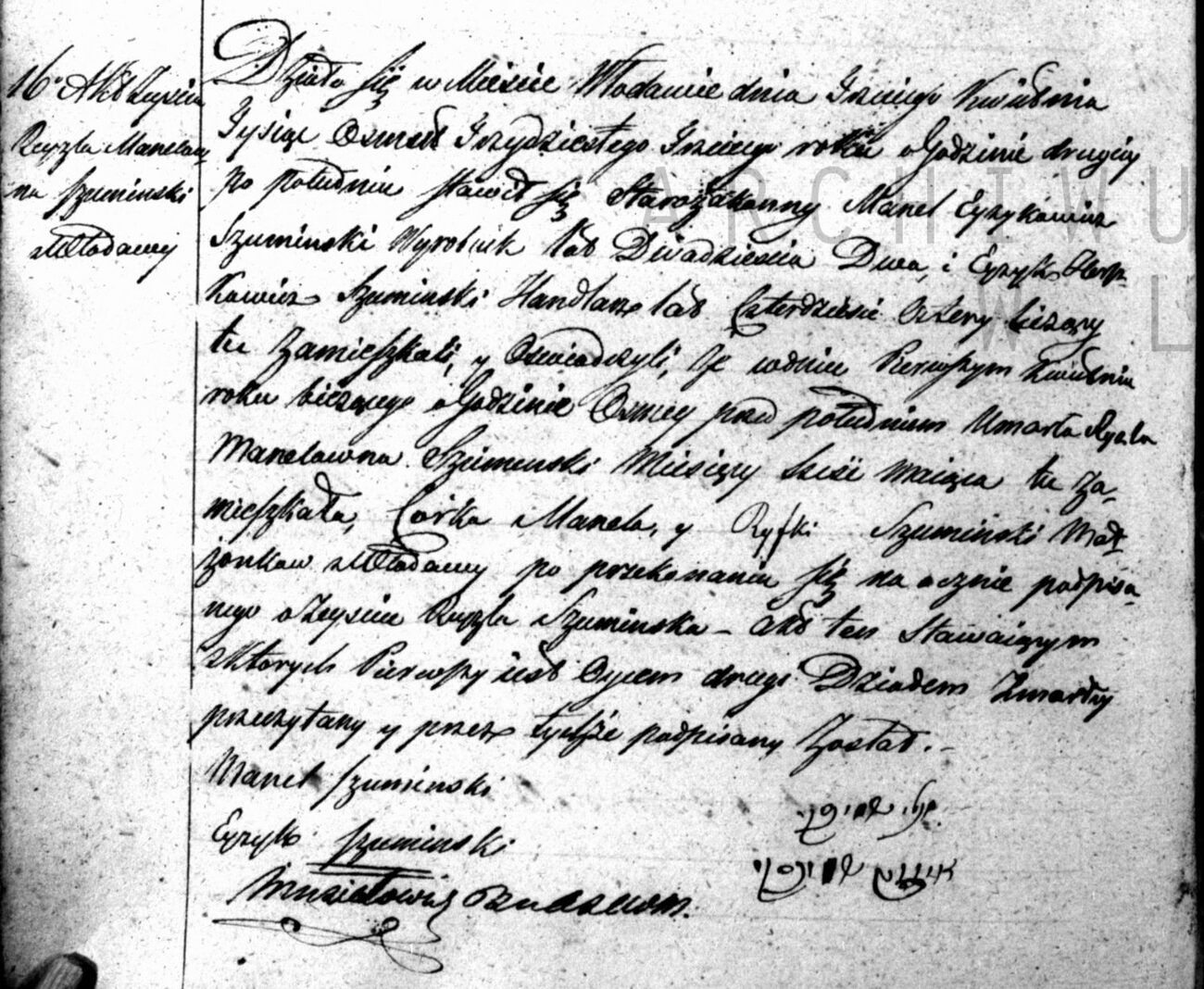
No longer just a name on a tree: the 1833 Włodawa death act records his son as "Ejzyk Herszkowicz" — Aizyk, son of Herszko — the first hard proof he existed and fathered Aizyk. The open question moves one generation deeper: who was Herszko's father?
1789 · Włodawa
Aizyk Szumiński
Trader (handlarz)
The 1833 death act of his infant granddaughter records him by name — "second declarant, trader, age 44, grandfather of the deceased" — the first document naming him as Manel's father. His own death falls in the lost 1837–83 registers.
1811 · Włodawa
Manel Szumiński
Day-laborer (wyrobnik)
Twice married: a first wife who lost an 18-month-old daughter, Rayzla, in 1833, then Edla Dweyra Weisbrode in 1848, a widower. Named, age 45, in Birth Act #109 of 1857. A working man — the "timber merchant" legend is disproven.
1857 · Włodawa
Moszko Aizyk Szumiński
Birth Act #109 — the anchor
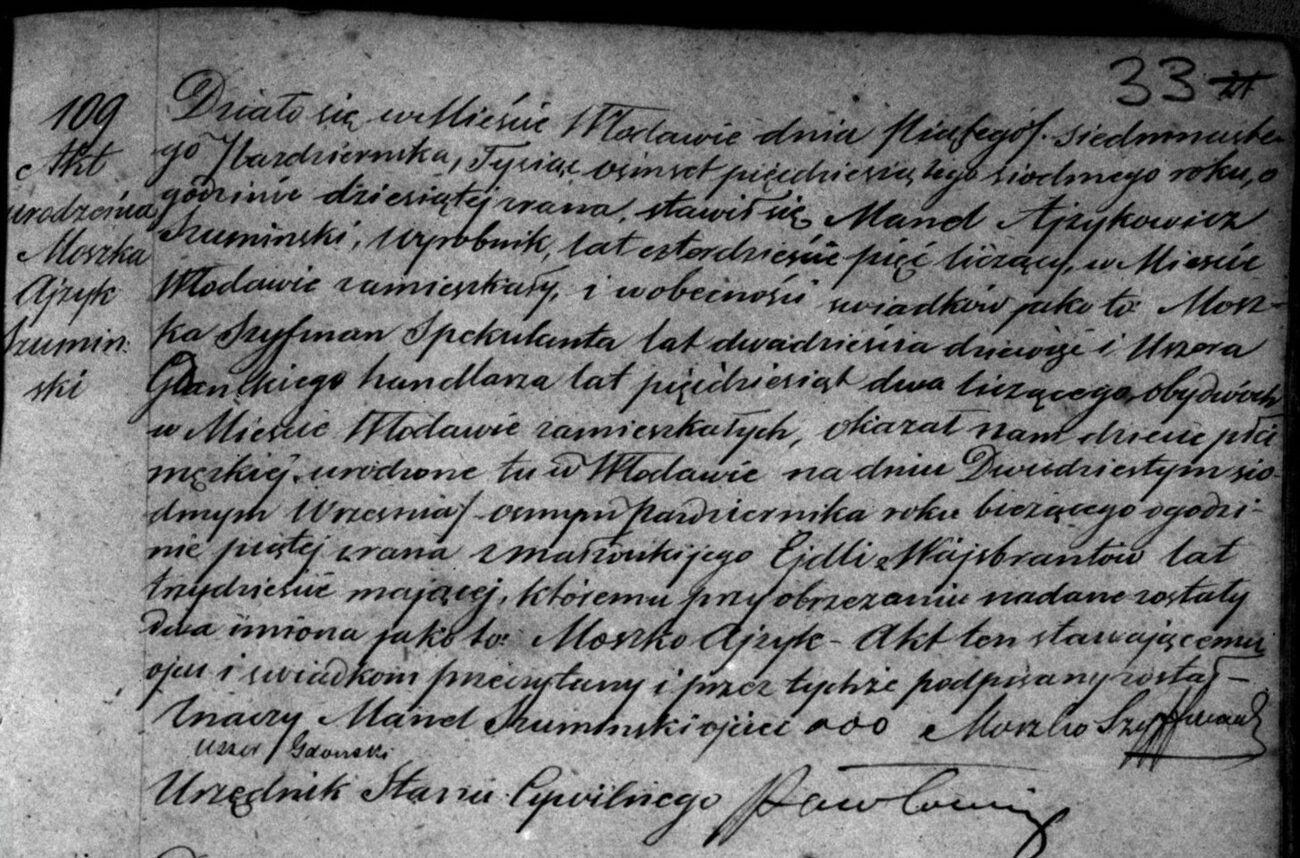
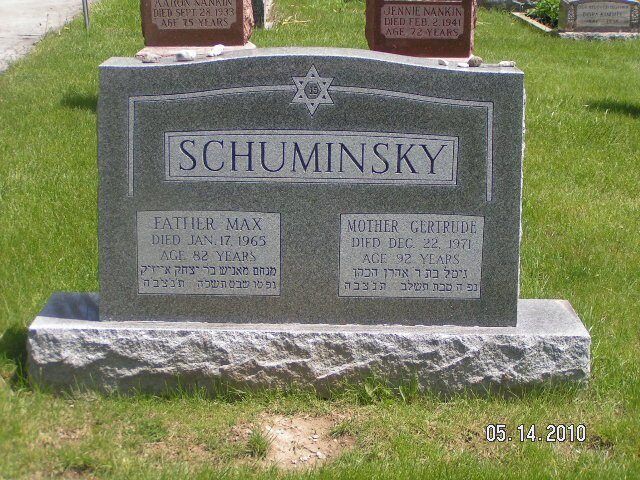
Born 8 Oct 1857, Włodawa Civil Registry act #109 — scan read and verified in the Lublin archive. Mother Edla Dweyra née Wajsbrant, 30. His Hebrew name surfaces on his son Max's headstone: "Yitzchak Ayzik."
1885 · Włodawa → Milwaukee
Max "Manis" Schuminsky
The bridge generation
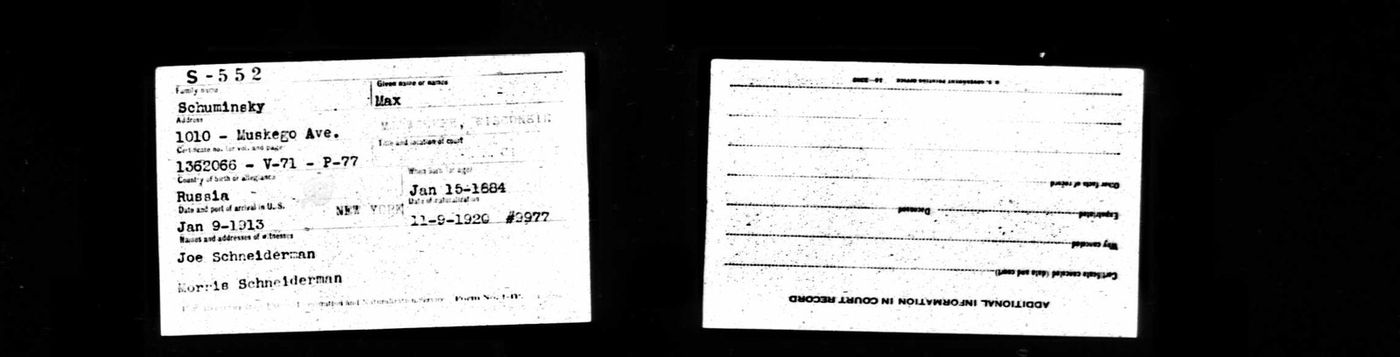
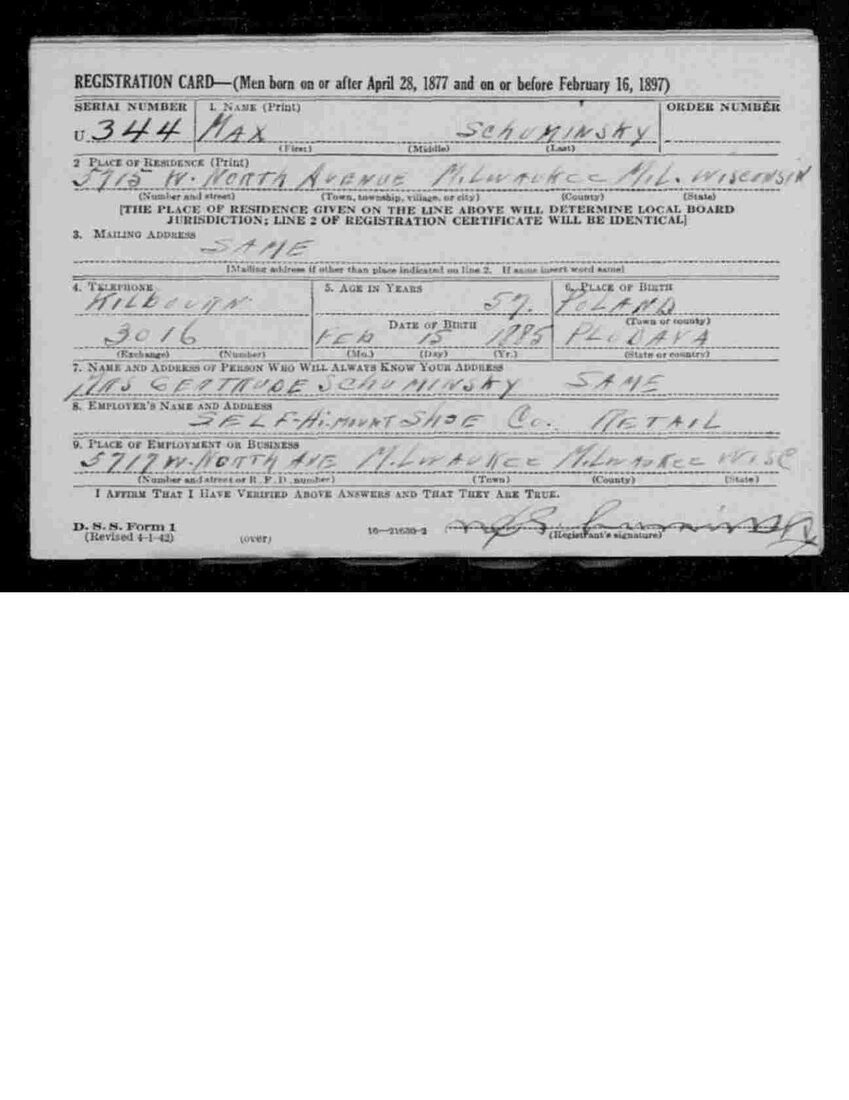
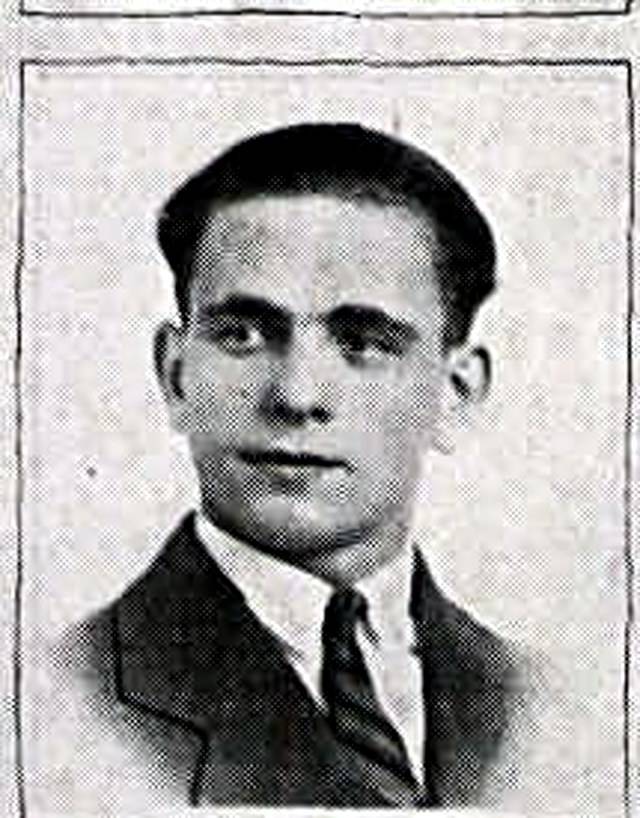
Born 15 Feb 1885 (self-signed 1942 draft card). Sailed alone from Libau on the S.S. Kursk, landed Ellis Island 9 Jan 1913, sent for the family a year later. Naturalized Milwaukee, 9 November 1920. By the mid-1950s he'd settled at 108 N. Hayworth Ave. — the same apartment for at least nine years running, per the 1956 and 1965 Los Angeles street directories — long enough to make him a genuine Angeleno, not merely a man who happened to die there. Died Los Angeles, 17 Jan 1965.
1909 · Poland → Milwaukee → FL
Phillip Schuminsky
Charming, warm — a Milwaukee shopkeeper
Born 28 Sep 1909. Bought the family shoe store from Max and ran it in Milwaukee, wig store next door, alongside Helen — by every account, he was the charming, warm one of the two. When Mike's own syndicated real estate deals hit a cash squeeze in the late 1970s as interest rates rose, Phillip and Helen helped with a small, warm gesture — selling some furniture and a few other things. The "real estate investor" line in his 1995 obituary was Mike's tribute — a son letting his father share in what their faith built.
1943 · Milwaukee → OKC → LA
Mike Schuminsky
Hi Fashion Wigs — 65 stores
Born 18 May 1943, Milwaukee. Took the inherited wig trade, imported directly, franchised 65 Hi Fashion Wigs stores out of Oklahoma City (1967), then real estate and self-storage. Died Bel Air, 2011.
1980 · Los Angeles
Jay Matthew Schuminsky
Cedars-Sinai · gen. 1 of 4
Born 25 Nov 1980 at Cedars-Sinai. Married Jayme Tolan, 2016. Commissioned this research — and pushed the documented line back five generations beyond what the family knew.
2017 · 2019 · 2021 · LA
Jaxon · Olive · Finn
All born at Cedars-Sinai
Jaxon Mike (2017), Olive James (2019), Finn Jagger (2021). The ninth documented generation — four-generation Cedars-Sinai continuity with their father. ~265 years and ~6,000 miles from Herszko of Włodawa.
The Short Version
The story, as the evidence now tells it
Nine generations in ninety seconds — every line below is anchored to a document you can open on this page.
1750s · Włodawa, on the Bug
A man named Herszko
The deepest documented ancestor — his son Ajzyk signs "Herszkowicz" in two separate acts. Herszko's own father is the open frontier, hunted now from three sides.
1789–1857 · four acts
The chain that holds
Ajzyk (1789) → Manel (1811) → Moszko Ajzyk (act #109, 1857) — birth, marriage and death acts from the Włodawa registers, each one photographed and readable in the records room below.
24 Dec 1912 · Libau
The shoemaker goes first
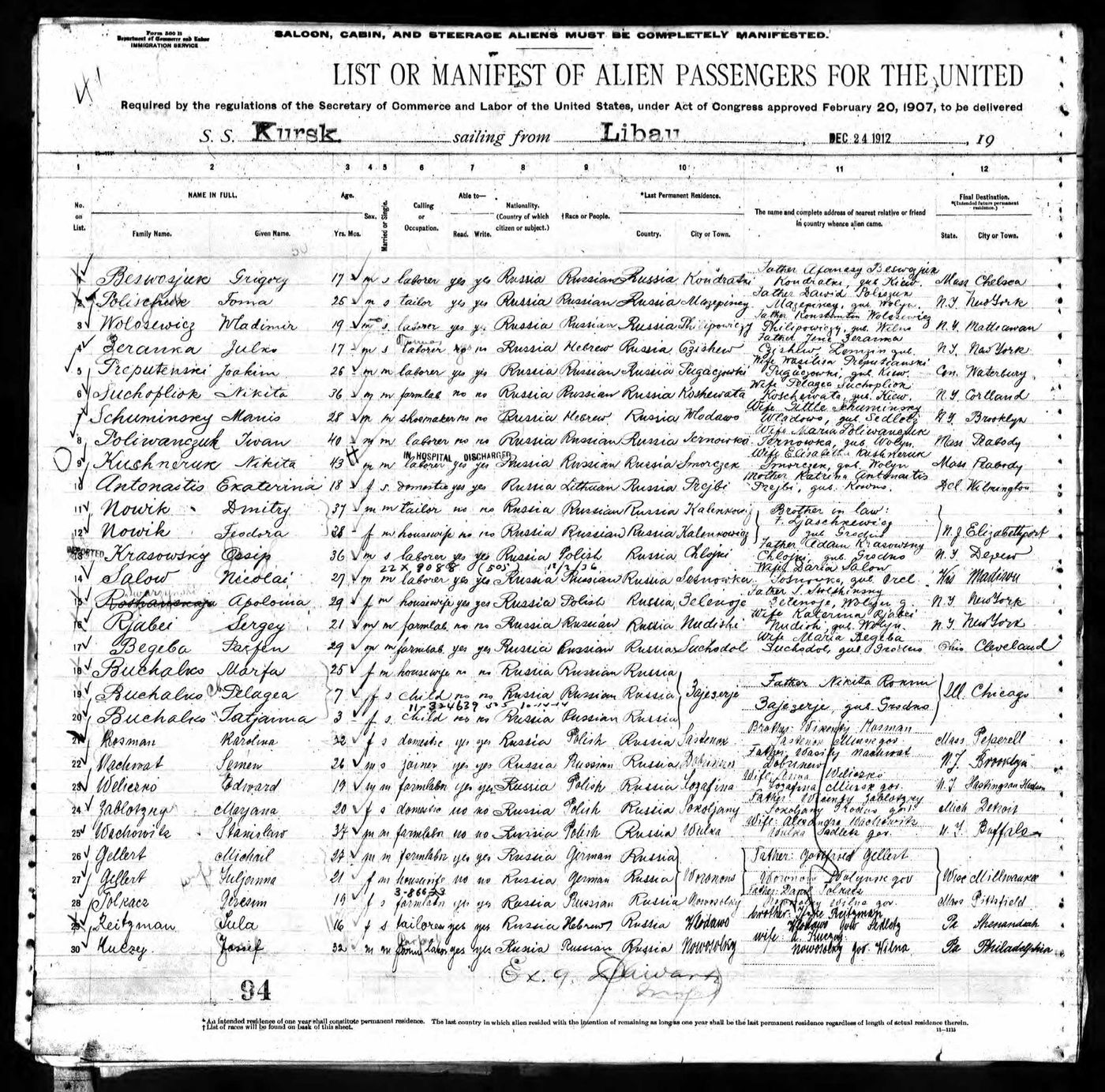
Manis Schuminsky, 28, boards the S.S. Kursk in steerage and lands at Ellis Island on 9 January 1913 — leaving "wife Gitle" behind and carrying a friend's Brooklyn address: Sol Leder, 26 Humboldt St.
Feb–Mar 1914 · Libau → Halifax → Vermont
Gitle and the boys — weeks ahead of the war
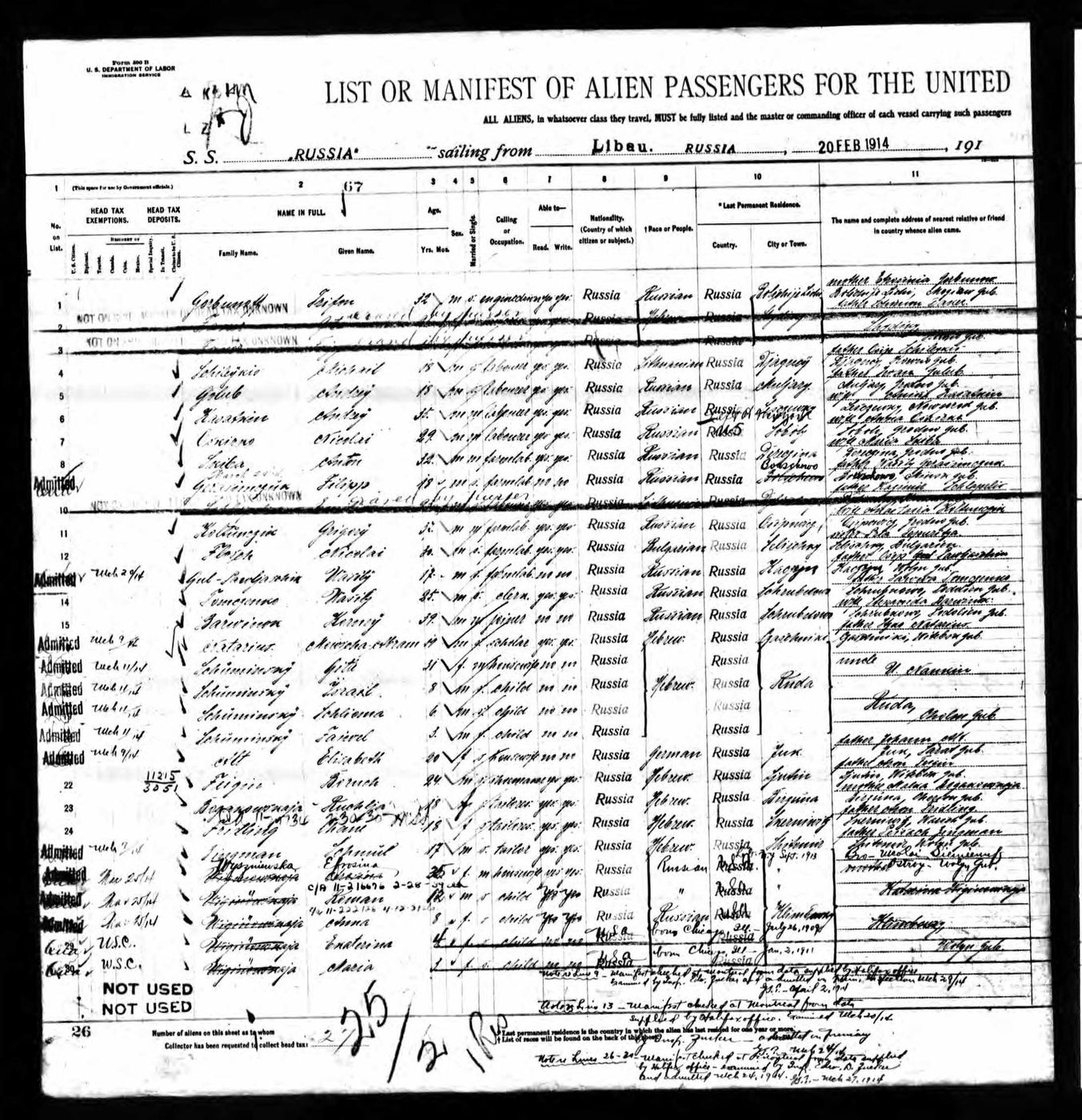
The sheet reads Izrail 8, Schlioma 6, Faiwel 3 — Yiddish names the family would trade for Sam and Phillip in America. Jack, ten, crossed the same year on his own ship. Five months later, Europe closed.
1914–1922 · Milwaukee
The boy who didn't grow up
One of the little boys on that sheet never appears in another record. The evidence leans toward Schlioma, born about 1908 — a son lost young, before the surviving cemetery books begin. He is counted here because he was real.
9 Nov 1920 · Milwaukee
Citizen
Seven years off the boat: Max is naturalized — and Jack's citizenship derives the same day. The shoe store carries the family; the census taker walks right past the house.
Late 1970s · Milwaukee → Oklahoma
A quiet assist
Mike, already succeeding with Hi Fashion Wigs and his own syndicated real estate deals, hit a cash squeeze as interest rates rose. Phillip and Helen helped where they could — selling some furniture and a few other things. Small, and typical of how close this family was.
Now · Los Angeles
The fourth generation born in America
Jaxon, Olive and Finn — born at Cedars-Sinai, carrying a name that began as the Polish village of Szuminka, five kilometers outside Włodawa. The research continues; the open mysteries are listed at the end of this page.
The Tree
Nine generations at a glance
The patriline runs down the spine; the lines that married in branch to the right. Bold marks a person a primary document anchors. Click any name for sources, a short biography, and — where documented — the Hebrew name each ancestor carried. Drag to pan, scroll to zoom.
Chapter II
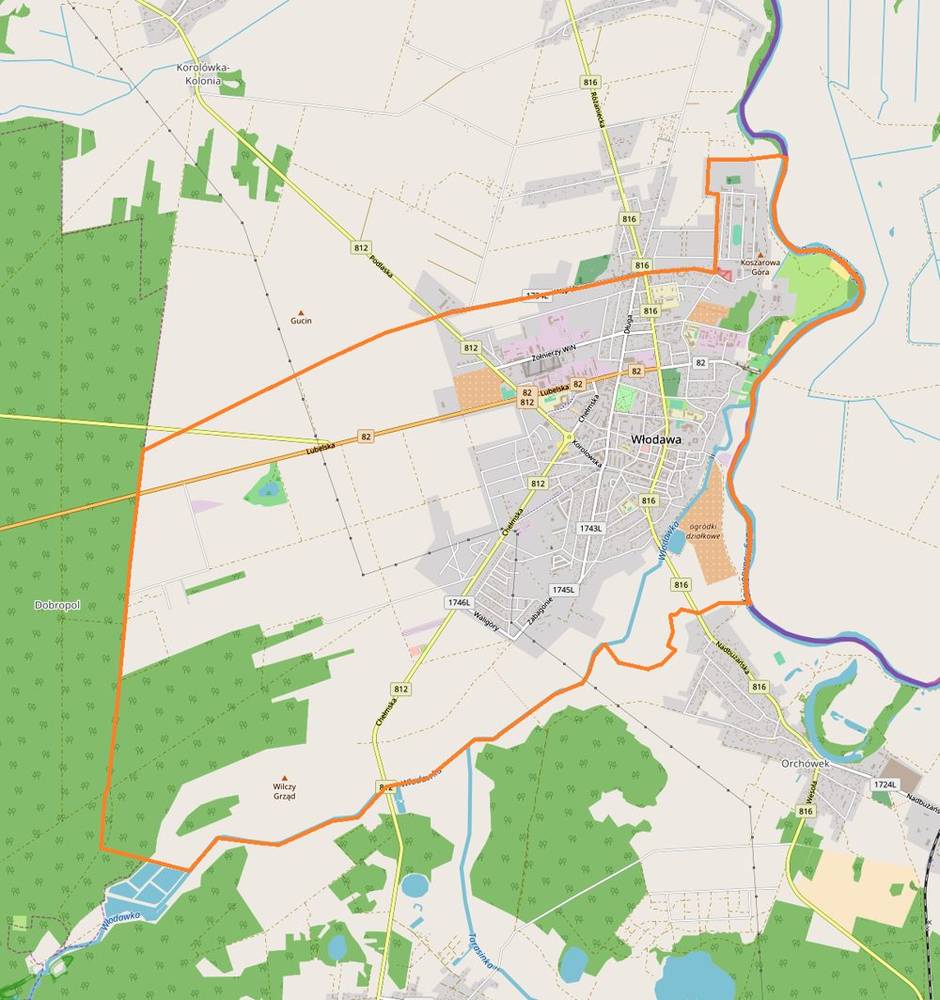
Włodawa — the shtetl on the Bug, and the name
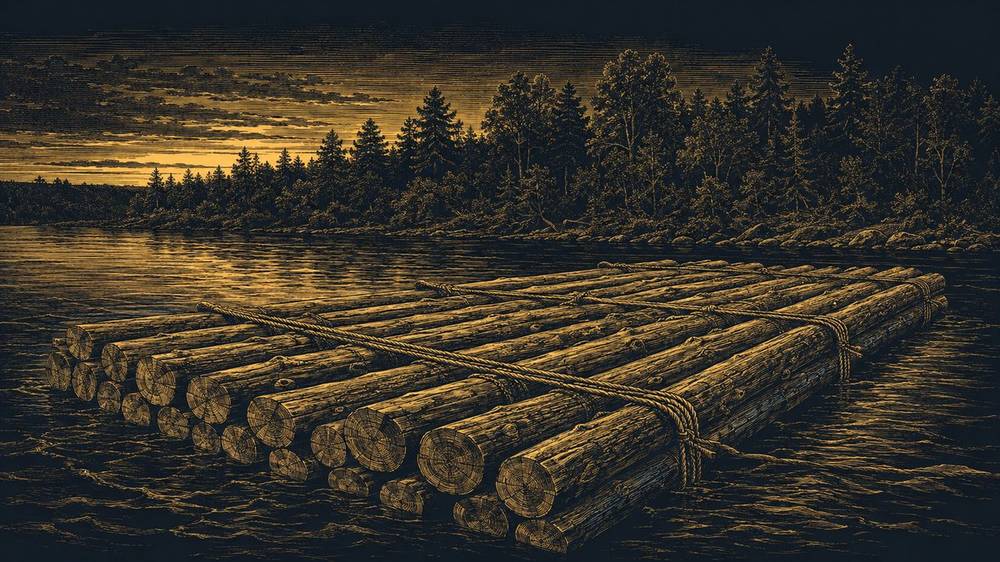
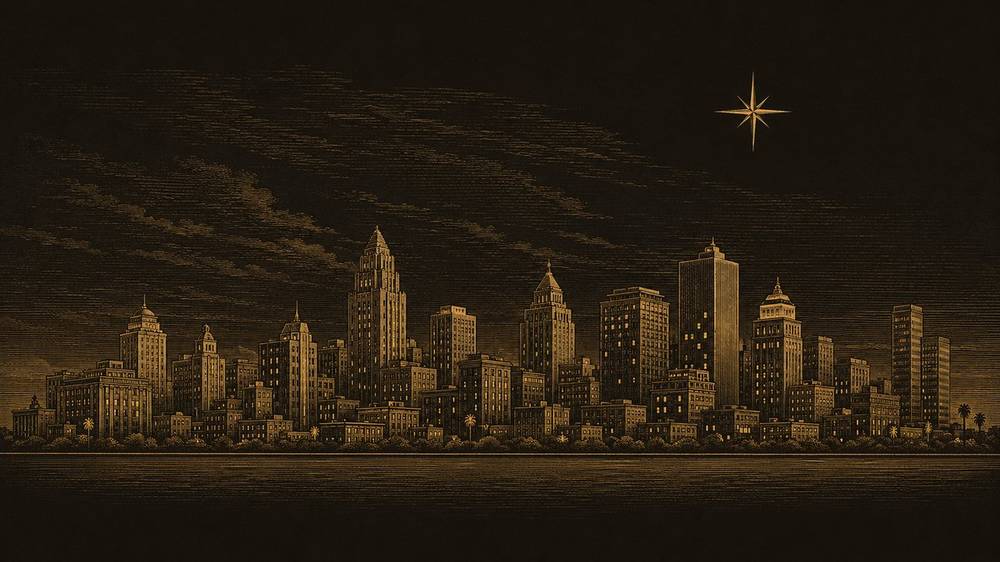
A border town where the Bug River bends — held by the Grand Duchy of Lithuania (the Brześć voivodeship) until the partition of 1795, then Austria, then Russia. The Crown of Poland began just across the little Włodawka River. The family name comes from Szuminka, a timber-staging village five kilometres north (51°35′N 23°33′E); "szum" is Polish for the rush of water. The surname was adopted under the Congress-Kingdom mandate around 1821, and the Jewish registers of Włodawa carry it from the first surviving book.
★ Documented · June 2026
Herszko found — the patronymic in the 1833 act
For the whole project, Herszko (c. 1760) sat at the edge of the record — a name with no document behind it. The 1833 Włodawa death act of baby Rejzla is signed by two men: her father Manel, and a second declarant recorded as "Ejzyk Herszkowicz Szuminski" — Aizyk, son of Herszko. A single patronymic, in a civil register, is the first hard proof Herszko existed and was Aizyk's father. The chain is now documented across six Włodawa generations, Herszko to Max.
"Never fear — the Szuminski name is still a pretty rare one… probably you are related to most or all of the Jewish-descended people who bear it today. The name comes from the village of Szuminka near Włodawa."
— Adam Goodheart, who first traced the line, to Jay
The registry books
The surviving Włodawa Jewish civil registers sit in the State Archive in Lublin (fond 35/1785). The family appears across every surviving decade — deaths 1827–33, births 1844–1908, marriages 1848–93. Sixteen indexed Szumiński records, every one now mapped. The 1837–1883 death books did not survive — a gap that probably swallowed Aizyk's own death act.
What the legend got wrong
Family legend made the Szumińskis timber merchants on the Bug. The documents say otherwise: Manel was a wyrobnik, a day-laborer, and the Włodawa memorial book's wood-trade chapter names not a single Szumiński. The village tie to Szuminka is real; the timber fortune is not. This history keeps the corrections as visibly as the discoveries.
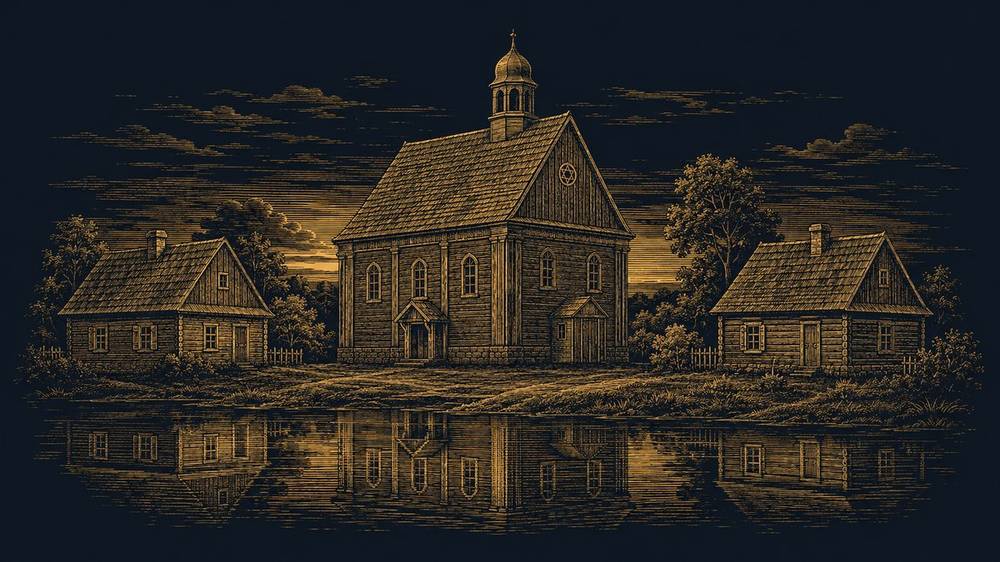
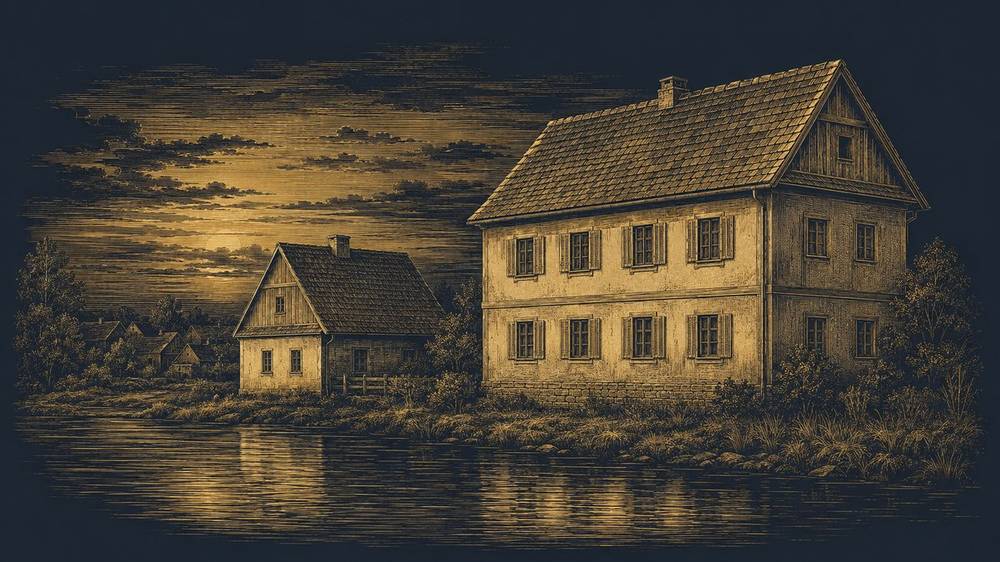
The shtetl on the BugDrawn from the record — no photograph of it survives.Włodawa on the ground todaySame rivers, same town center, a different century.
Chapter II½
The 1773 census — Herszko's frontier
In July 2026 the family obtained the actual page — a Polish estate clerk's hand, ten scans, delivered from the State Archive in Lublin. It doesn't name Herszko's father. It does something almost as good: it puts four men with his exact name on the page, thirteen years before Aizyk was born.
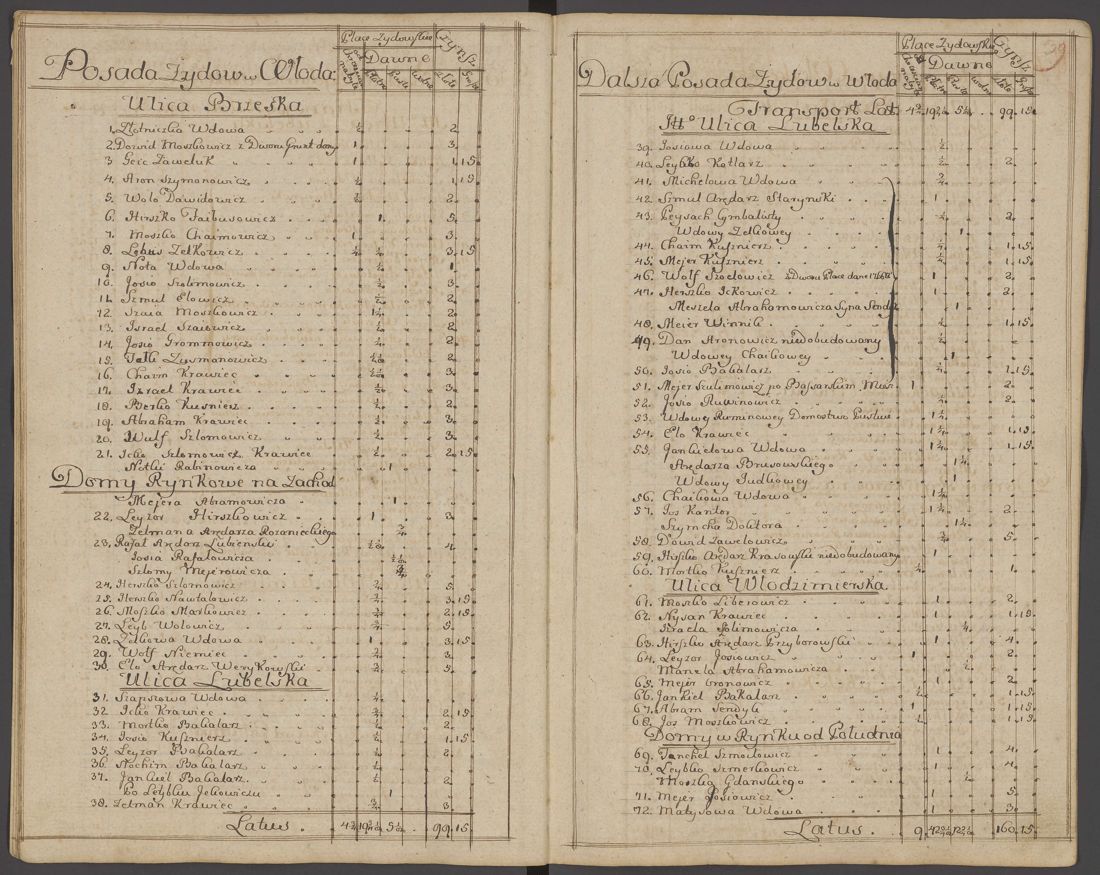
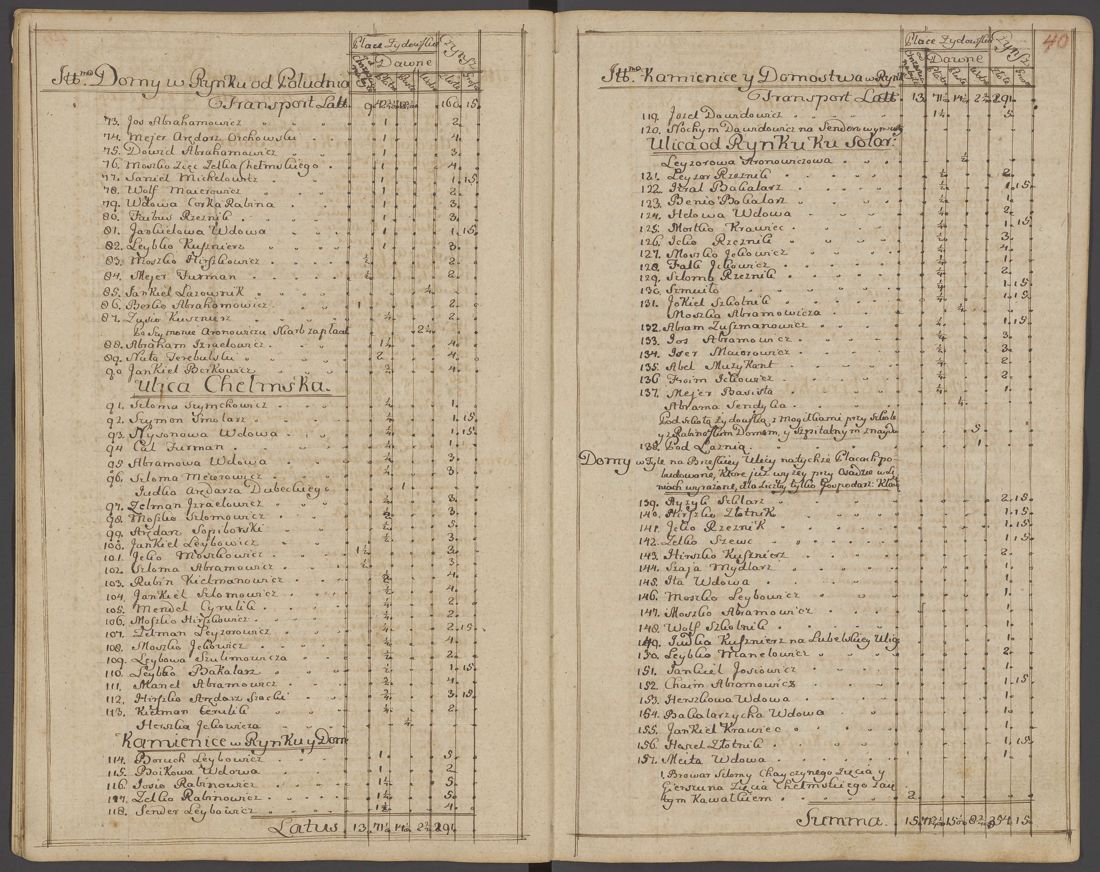
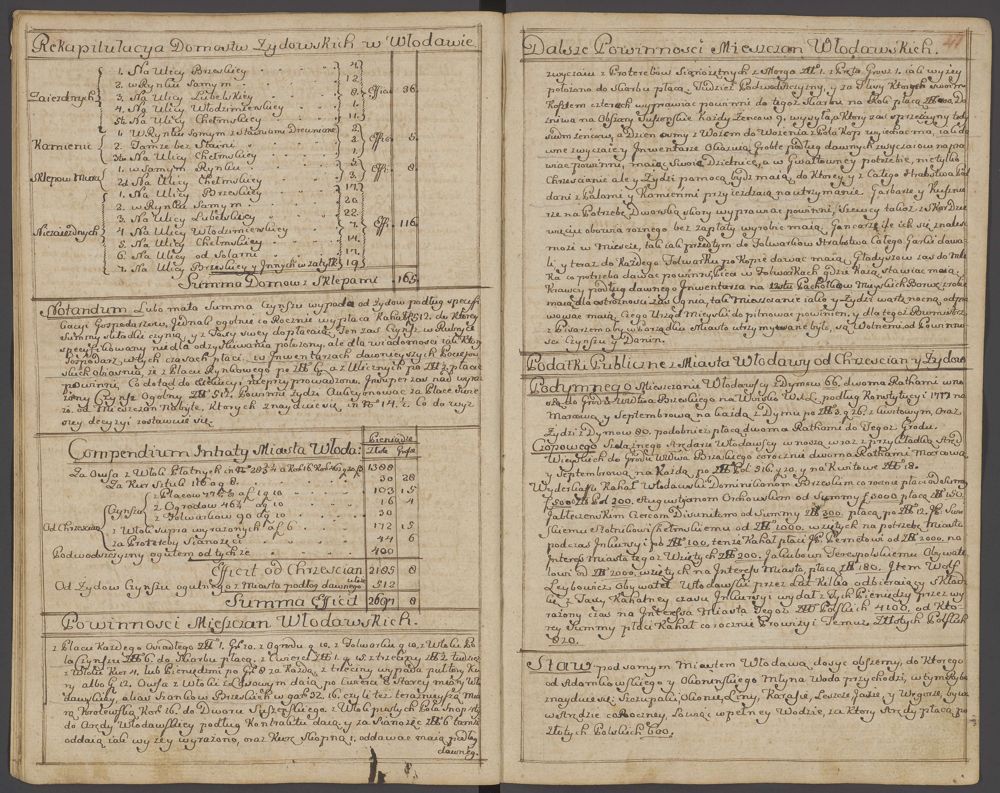
The document is a 1773 inventory of Włodawa town — AP Lublin, zespół 86 (Archiwum Zamoyskich z Włodawy), sygn. 3 — drawn up at the moment the estate changed hands from the Pociej family to Count Flemming's heirs. Two of its ten pages carry a heading in looping cursive: "Posada Żydów w Włodawie" — the standing of the Jews of Włodawa — a street-by-street tally of roughly seventy Jewish households, each a name, a patronymic, a rent figure. It is the oldest document naming individual Jewish Włodawa residents the family has ever held in hand.
1773 · Posada Żydów w WłodawieOpening page — Ulica Brzeska, heads #1–38.1773 · Dalsza PosadaContinuation — through head #72.The recap page165 is a property count — not more names.
★ Two readings, one answer
Four men who could be Herszko himself
The page was read twice, by two different methods a year apart on a single afternoon — once by eye, once by a Polish-trained handwriting-recognition model (Transkribus) run independently over the same scans — and both readings landed on the same four men, at the same four positions in the list. These four are candidates for a specific role: none are relatives found so far, they're men who could be Herszko himself, each entry naming a different possible father of his own:
No.
Name
Father named
Street
6
Hirszko Faibusowicz
Faibus
Ulica Brzeska
24
Herszko Szlomowicz
Szlomo
Domy Rynkowe na Zachód
25
Herszko Nawtalowicz
Naftali
ditto
47
Herszko Ickowicz
Icek
Ulica Lubelska
None of the four can yet be called the Herszko. But their existence resolves a small arithmetic problem the family had been quietly ignoring: if Herszko was born in 1760, as the tree has always said, he'd have been thirteen in 1773 — a boy, not a householder. Move his birth a decade earlier, to about 1750, and he'd have been twenty-three — old enough to be one of these four men himself, each entry naming a different possible father: Szlomo, Naftali, Icek, or Faibus.
This is a guess, clearly labeled as one. It is falsifiable, and it was tested: a search of every surviving Włodawa death record from 1826–1836 — the window in which a man born circa 1750 would plausibly die — for any of these four patronymics recurring on a "Herszko" turned up nothing. That's not proof against the hypothesis (the free-searchable index is thin, and the registers only survive from 1826), but on the evidence in hand today, the ~1750 birth-year guess is unconfirmed and slightly disfavored, not supported. It stays on the record as an open, working idea — not a fact folded into the tree.
A generation later — 1792, a different kind of lead
An estate-wide inventory of Włodawa (AGAD Warsaw, Archiwum Zamoyskich, unit 2733) names four more Hersz-rooted men active in the town nineteen years after the census: Herszo Felkowicz (a merchant) and Herszko Uszkowicz (a shoemaker), plus a widow, "Herszkowa Lachmanowiczowa." No Ajzyk appears anywhere in the sections read. These three are a different kind of evidence than the four above — not candidates to be Herszko (by 1792 the real one, if born around 1750–60, would already be an old man), just further proof the name ran common in this community. One name in the same document matters differently: Zelman Herszkowicz, whose own patronymic shows a Herszko already established as someone's father a generation earlier — making him a candidate son, a possible brother of Ajzyk, not a candidate to be Herszko himself. He's the leading lead in the whole search; see the open mystery below.
The village behind the name
Szuminka, the timber-staging hamlet that gave the family its surname, turned out to have its own inventory after all: a 1770s Rożaniec estate survey (AP Lublin, zespół 86) devotes several full pages to it by name — its own manor farm buildings, its own boundary description, and a household-by-household census of roughly twenty tenant families, none of them surnamed Szumiński. It's not a standalone volume — it's a village-sized section inside the larger Rożaniec estate book — but it is a real, dedicated accounting of the place, not just a passing mention. A widely repeated claim that the village had a Jewish-run tavern by 1850 was checked against its supposed source this month and isn't actually in it — retracted here rather than left standing.
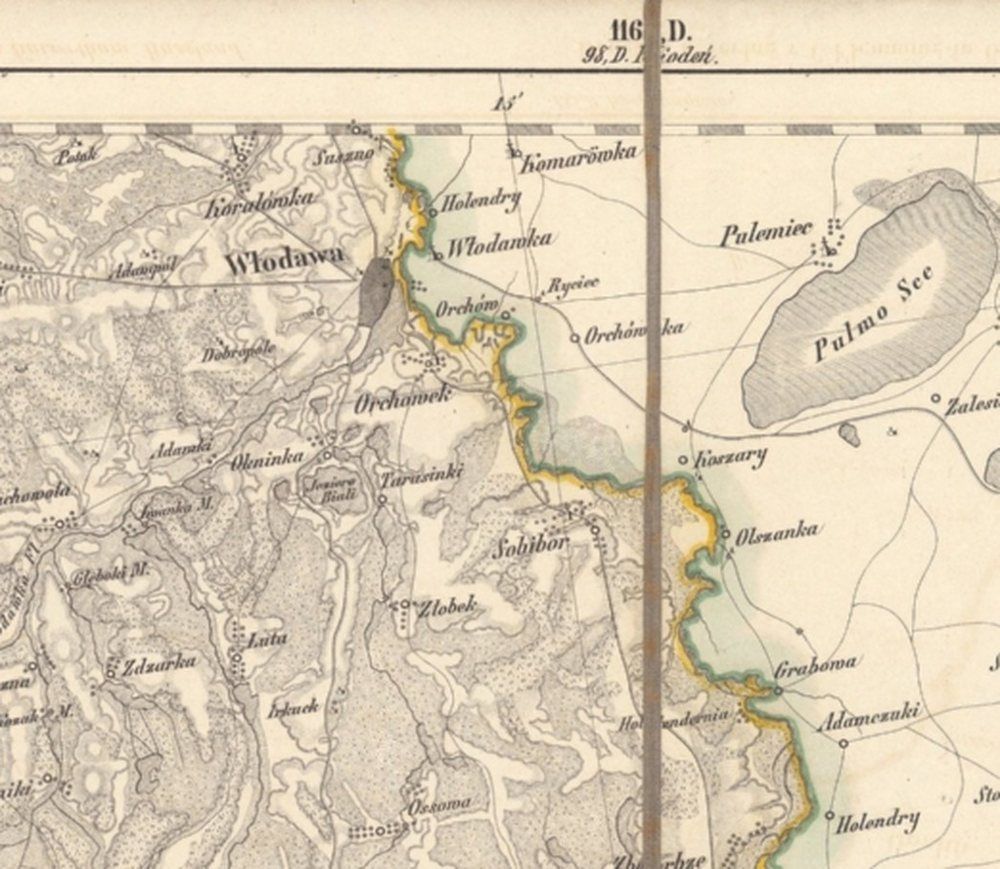
SzuminkaThe timber-staging hamlet the name comes from — drawn from the record.A real 19th-century surveyWłodawa, Sobibór, Orchówek, Suszno — all legible, all named in the family's own research.
Then and now — the same ground, roughly two centuries apart. Szuminka sits about 5km north of Włodawa proper, 51°35′N 23°33′E, right where the Reymann survey above places the town's northern approach.
Live modern map (OpenStreetMap contributors) — Szuminka today is a small rural settlement inside gmina Włodawa, still north of the town on the same road the 19th-century survey shows.
Szuminka itself doesn't carry its own label at this map's scale — it was a hamlet inside the Włodawa estate's built-up edge, too small for a regional topographic survey to separately mark, the same way most of the estate's 19 folwarks don't appear by name. What the map does confirm, in period ink rather than a canon note: Sobibór sits exactly where the family's own 1942–43 research places it, a few kilometres from town; Orchówek and Hańsk sit on the far side of the Włodawka, in Crown Poland proper — the Grand Duchy of Lithuania, which held Włodawa itself, stopped at that river, so those two villages belonged to a different jurisdiction than the town a few hundred meters away — the actual river-border the jurisdiction research turned on; and the Bug itself, gold and green banding either side, is the wider Poland–Russia partition line the family's whole migration eventually crossed the other way.
The estate changed hands around the family without their leaving it: Sanguszko → Leszczyński → Pociej → Flemming (1745) → Czartoryski (1771) → Zamoyski (1798). The 1773 census falls in the Czartoryski years, taken at the moment the last Pociej heir ceded the estate — a changeover, not a sale, which is likely why an inventory was ordered at all.
The Building
The Great Synagogue — where the family prayed
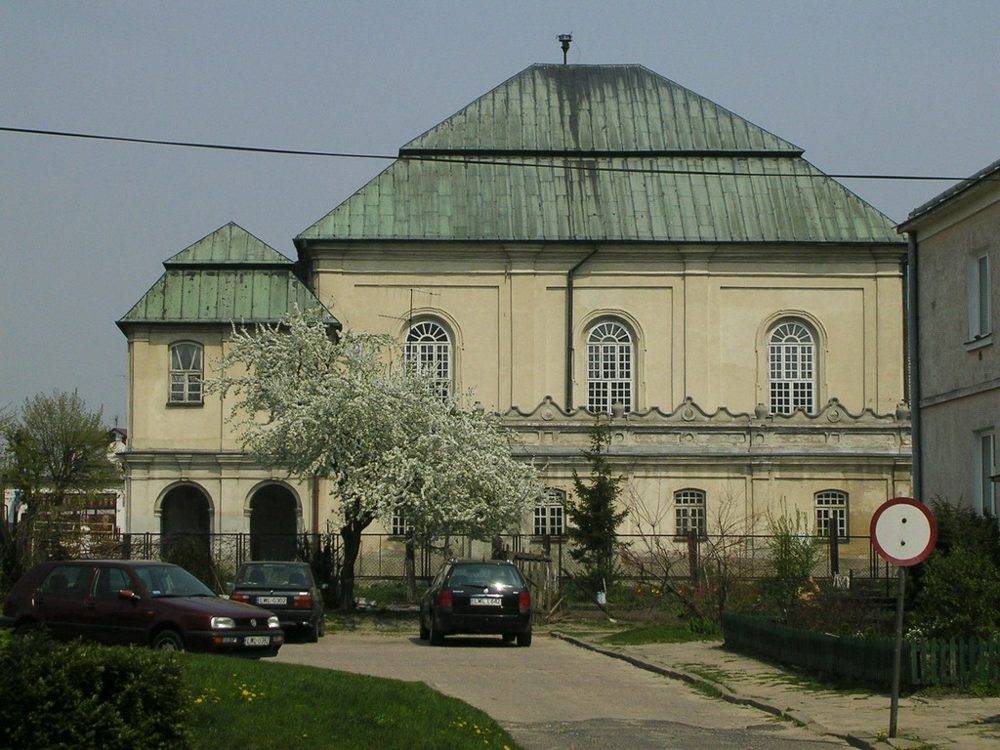
The town the family left had one extraordinary building, and it still stands. When Manel carried his newborn son Moszko Aizyk in for his bris in 1857, this is the room they walked into. These are real photographs — the building today, unaltered since the family last saw it.
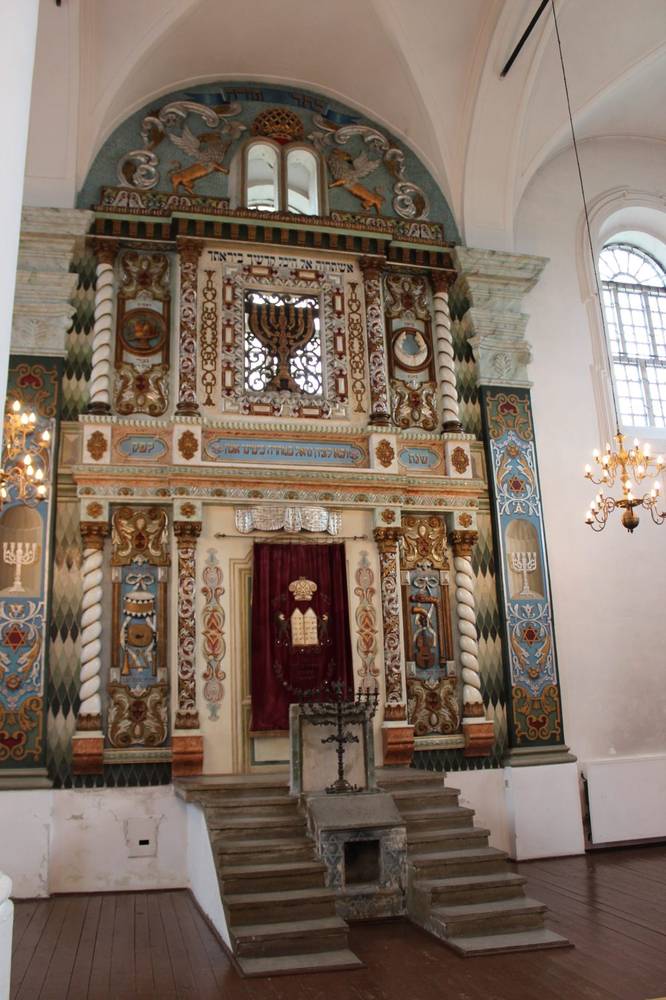
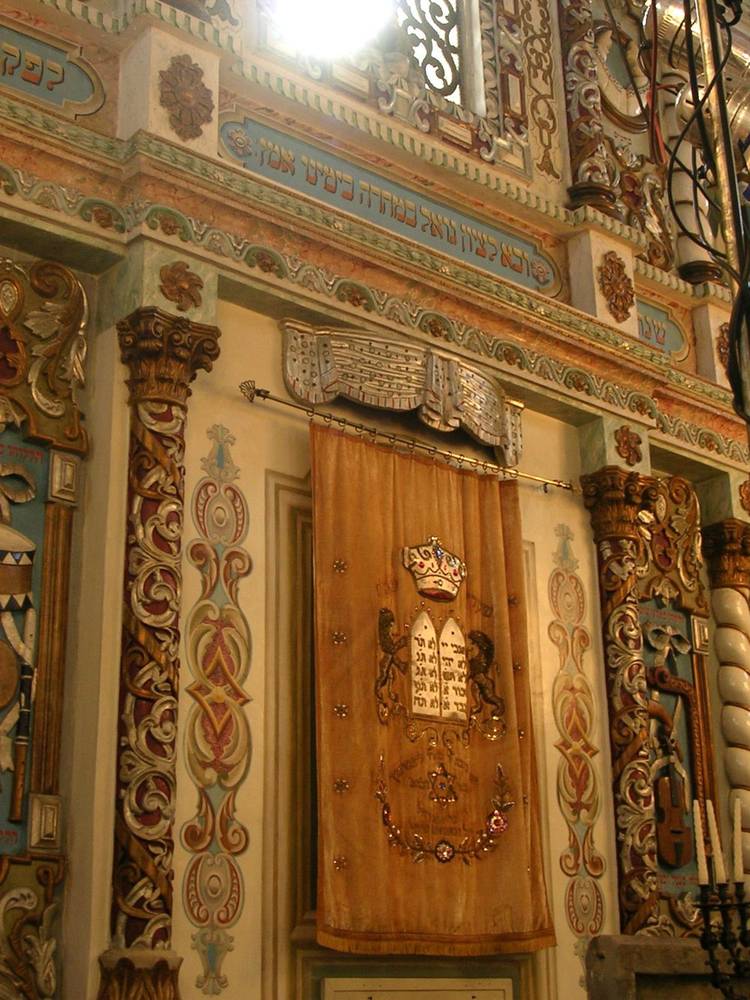
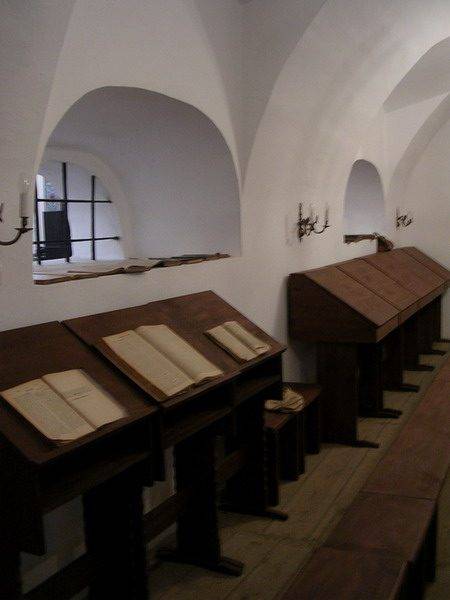
The synagogue todayUnaltered since 1774 — the family's building.From the streetTwo bowed windows face the Bug.The Torah arkWhat Manel and Moszko Aizyk faced in prayer.The women's galleryWhere Rejzla and Edla Dweyra would have sat.
Włodawa's Great Synagogue was raised between 1764 and 1774 in late Baroque, to the design of Paolo Antonio Fontana — the architect the Czartoryski family used for their own palace — and paid for jointly by that noble house and the Jewish community council. Two bowed windows face the Bug; a mansard roof crowns it; the flanking wings give it the bearing of a Polish manor as much as a house of prayer. It is counted among the finest Baroque synagogues in Poland, and one of the very few that came through the war intact.
An interior of two worlds
The walls were molded and painted with Jewish and Polish motifs together — a stork in the northern ceiling rosette, an eagle above the bimah that read as both Poland and Israel. The Torah ark was carved with the musical instruments of Solomon's Temple. Burned in a 1934 fire and rebuilt, it stood just five years before the Germans came.
The shoemakers' corner
The building doubled as a trade hall. As early as 1774 the northern alcove was set aside for the tailors' assembly, the southern for the shoemakers — craft-based prayer quorums where worship and livelihood sat together. A shoemaking family like the Szumińskis would have gathered in that southern corner to pray and to keep their trade at once.
"This was not just a building. For at least six generations it was the spiritual center of their world."
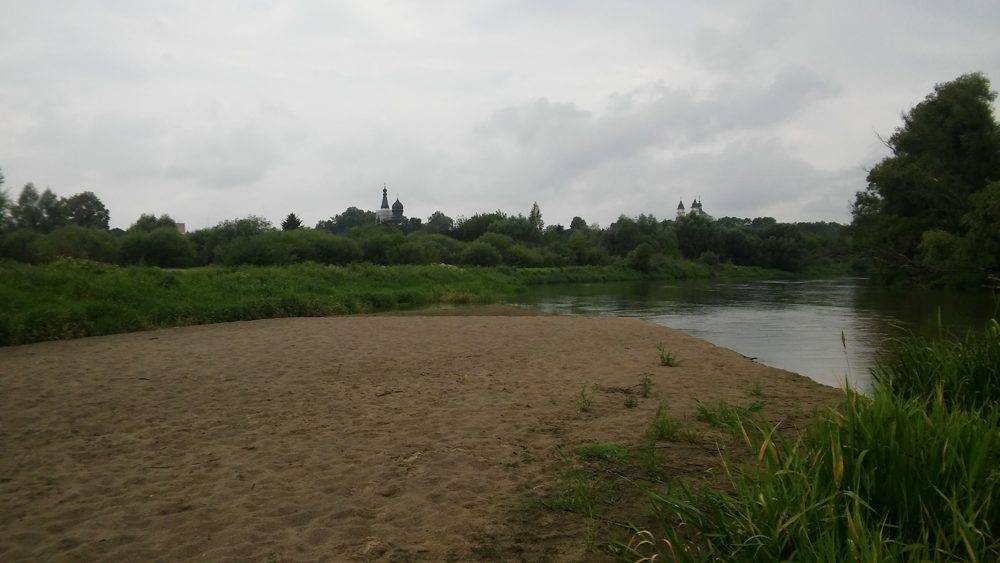
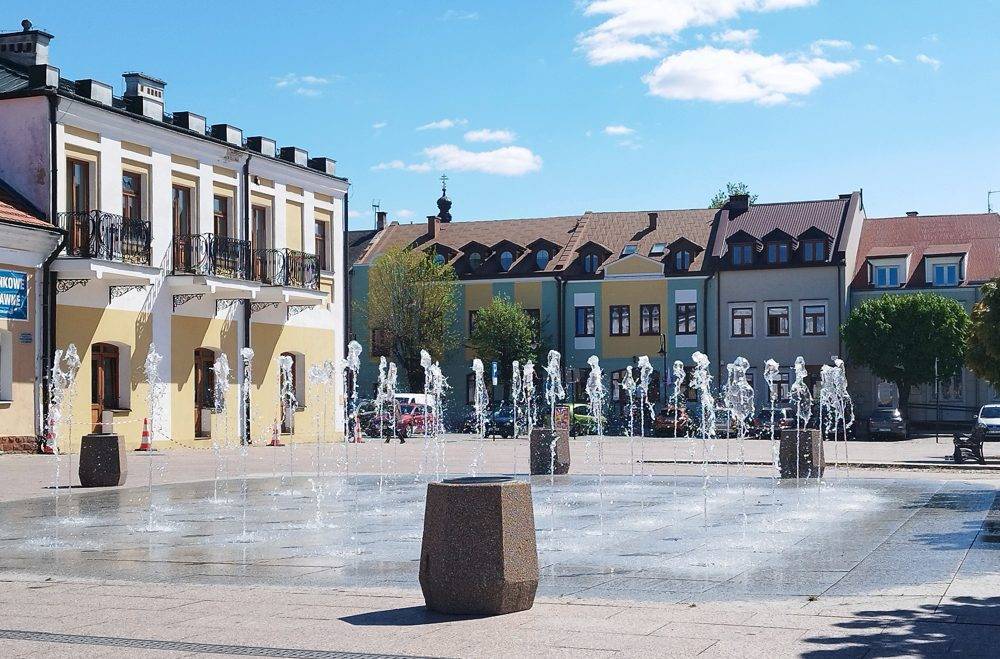
The Museum todayMuzeum – Zespół Synagogalny, opened 1986.The Bug RiverThe border the family lived beside.The market squareWhere Aizyk traded, as it looks now.
Today it is the Museum of the Łęczna-Włodawa Lake District, restored through the 1980s and opened in 1986 — the rare Polish synagogue neither destroyed nor left to decay. The marketplace where Aizyk traded is gone in every sense that matters, but the square itself, above, is the same ground.
Deep Origins
Before the paper — what the DNA reaches
The written record stops at Herszko, around 1760. A 23andMe test reaches tens of thousands of years past him — and fixes a marker on the male Schuminsky line that any cousin can be tested against.
E‑M34
Paternal haplogroup
~20,000 yrs
Depth of E‑M34's parent branch, E‑M123
T1a
Maternal haplogroup
78th
Percentile · 255 Neanderthal variants
The paternal line carries haplogroup E‑M34, and beneath it the finer branch E‑Y6940 — a Y-chromosome signature passed father to son, unbroken, for as long as the line has existed. Every male Schuminsky carries it. E‑M34 is found in roughly one in five Ashkenazi men, and it sits inside a much older tree. Its parent branch, E‑M123, is thought to have formed somewhere between the Levant and East Africa around 15,000 to 20,000 years ago — researchers are still divided on which side of the Red Sea it started. One level up from that, E‑Z827 — the branch E‑M123 itself descends from — is dated to roughly 24,000 years ago, likely somewhere between North Africa and the Middle East. And the whole E haplogroup, further back still, traces to East Africa: the same root system as most of the deep human Y-chromosome tree. Today, E‑M34 specifically turns up concentrated among Semitic-speaking populations — Ethiopian communities on one side, and heavily among Ashkenazi and Sephardi Jews across the Middle East and Mediterranean on the other. Whichever exact ground it formed on, the line spent thousands of years working its way through the Fertile Crescent and the Roman world before turning north into the Slavic lands — a much shorter, much better-documented walk brings it the rest of the way: E‑Y6923 to the late Roman period around 350 CE, then E‑Y6940 itself, its founder dated near 750 CE, arriving eventually at a border town on the Bug.
The maternal line runs to haplogroup T1a, traced to a single woman in the Middle East about 14,500 years ago, just after the last Ice Age — a rare lineage, carried by only about 2% of people alive today. Layered over both is the older European inheritance: 255 Neanderthal variants, more than 78% of people carry, a trace of the few thousand years when modern humans and Neanderthals overlapped.
★ The priestly line, twice
Kohanim married into the family — on two sides
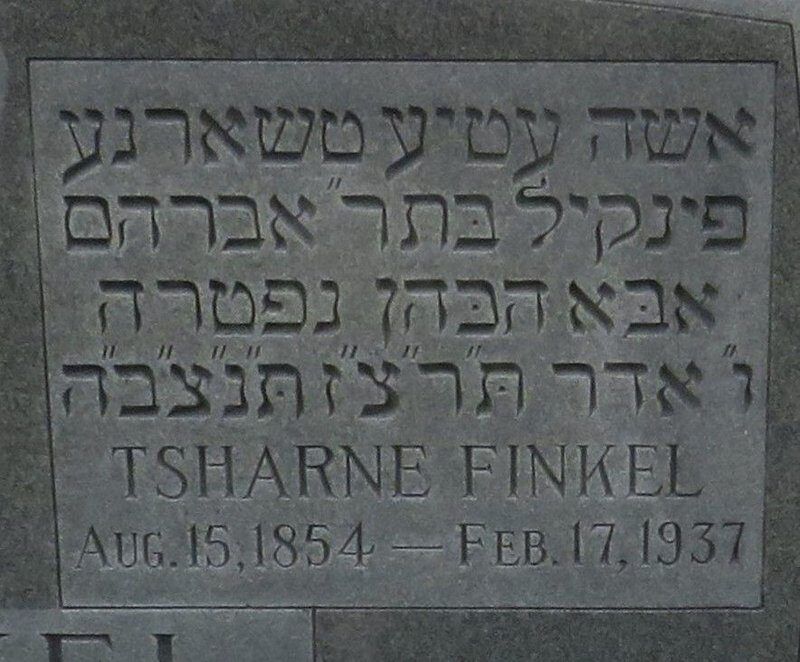
Two independent Kohen (priestly) lines feed the tree. Max's wife, Gertrude Nankin, was the daughter of Aharon HaKohen Nankin (1858–1933); a second priestly line runs through the maternal side, in Avraham Abba HaKohen, named on his daughter's headstone. Kohen status passes strictly father to son, so these are lines the family descends from rather than carries in the Szumiński name — but the priestly Y-signature is real, and it is testable: a Y-DNA match among Nankin male descendants would put it in the record, the same way E‑Y6940 can be matched across the Schuminsky cousins.
The paper and the DNA have already agreed once. A 3.6% DNA match, Armand Eisen, carried a family story of a line "possibly originally Seligman" — and turns out to be Jennie Eisen's own family: her father, Jakob Lajb Eisen, married Fannie Seligman, and Armand's grandfather Abraham was Jennie's brother. The garbled memory wasn't a surname variant at all — it was a wife's maiden name, folded into family story a generation later. An ordinary sibling relationship, confirmed independently by a 1920 Omaha family photograph naming the same Jacob Eisen.
One frontier stays open here too. The 23andMe haplogroup fixes the deep branch, but a Big Y-700 test — and a second Schuminsky or Nankin man willing to swab — is what would tie the genetic line to the documented one, and perhaps reach past Herszko at last.
The Records
The documents themselves
This history is built from paper — Polish civil-registry cursive, a self-signed draft card, a census line. Tap any to read it full-size.
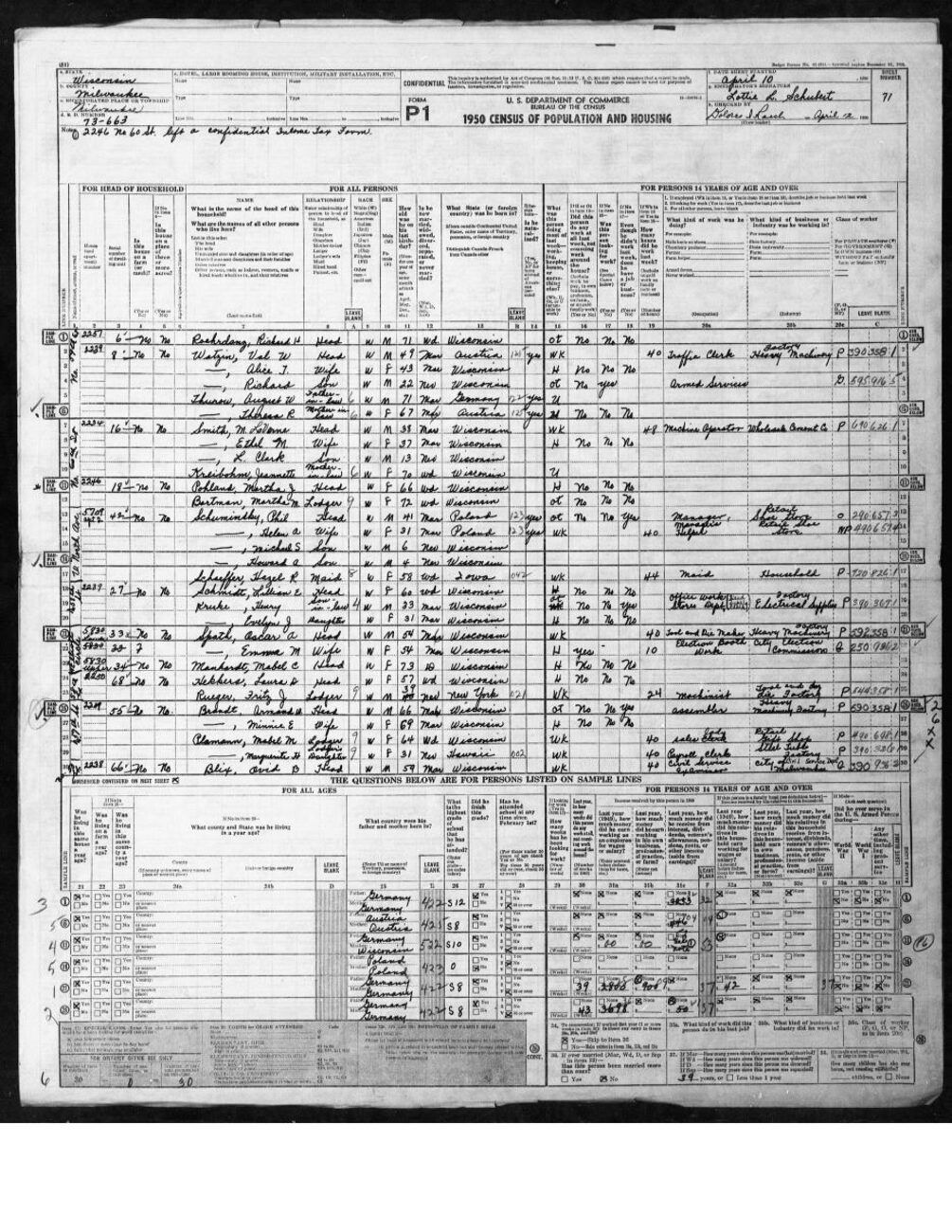
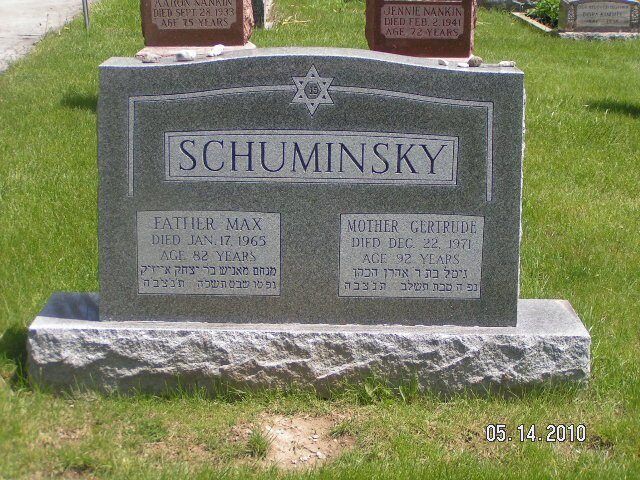
1833 · Death of RejzlaAizyk signs as "Herszkowicz" — the proof of Herszko.1848 · Manel & Edla DwejraNames Aizyk & Rejzla as Manel's parents.1857 · Birth of Moszko AizykMax's father — the anchor, act #109.1913 · The Kursk manifestMax, line 7 — shoemaker of Włodawa.1914 · Gitte and the boysVia Canada — the St. Albans sheet.1920 · CitizenNaturalized 9 Nov 1920.1942 · Max's draft cardSelf-signed — fixes his birth year at 1885.1950 · Milwaukee censusPhillip's household — born in Poland.Max's headstoneThe Hebrew names his father in stone.
Chapter III
The crossings — two ships out of Libau
The family story said "Ellis Island." The records say something better: two voyages, thirteen months apart, from the Baltic port of Libau — and only one ended at Ellis Island.
Drag and zoom to trace the actual route — Włodawa to Los Angeles, on a real map.
★ Below the waterline
Steerage — how Max actually crossed
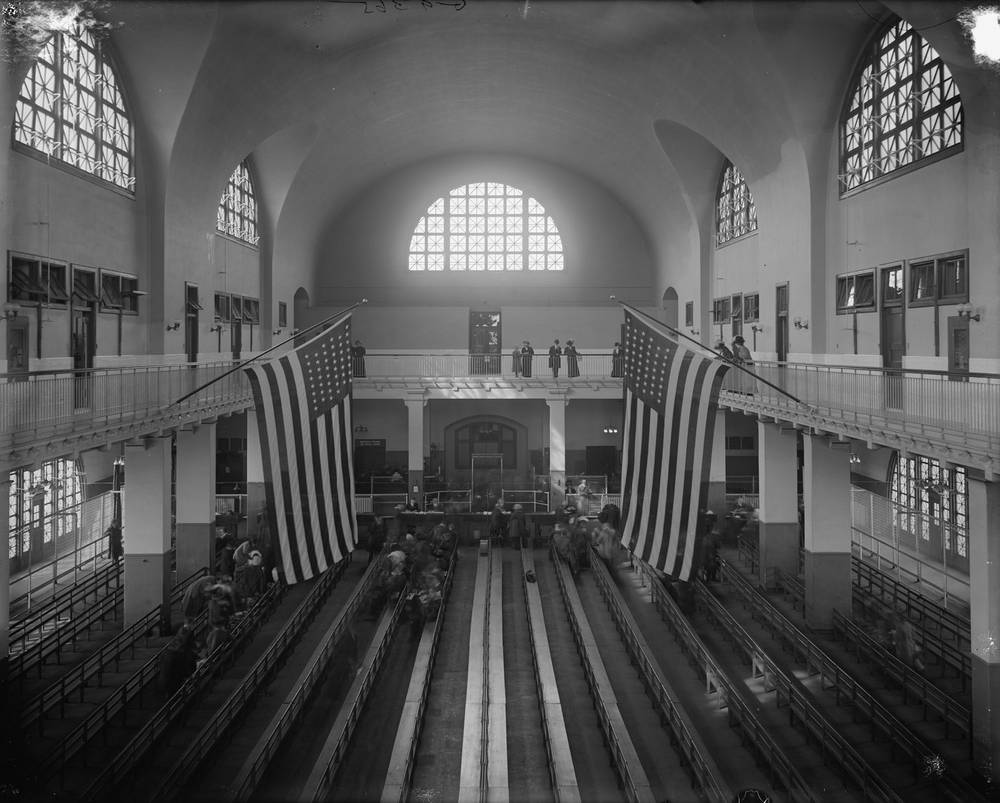
Max almost certainly crossed in steerage — a roughly $30 fare, often prepaid by a relative already ashore. Below the waterline it was dark and crowded, timber berths stacked two-high, conditions a U.S. inquiry of the era called "unfit for the transportation of human beings." He boarded at Libau, took the January Atlantic, and passed the Ellis Island inspection that could still turn a person back. Twenty-eight, healthy, admitted.
Libau → Ellis Island · 9 Jan 1913
S.S. Kursk — Max goes first
"Manis Schuminsky, age 28, married, Hebrew, last residence Wlodawo, Russia." He traveled alone — the father goes first, earns the passage, sends for the family. Manifest T715-2001-703, line 7.
Libau → Canada → St. Albans VT · Feb–Mar 1914
S.S. Russia — Gitte and the boys
The "missing" family manifest was never at Ellis Island. Gitte (Gertrude), 31, with three boys, sailed from Libau, landed in Canada, and crossed into the U.S. by rail at St. Albans, Vermont (M1464-247-104). Last residence: Ruda, Chełm gubernia. The relative left behind: "an uncle… Nankin" — Gertrude's own family.
1925
S.S. Ausonia — the Gedanke line
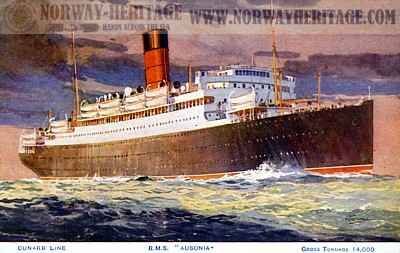
Sam, Anna, and six-year-old Helen Gedanke sailed Southampton → Ellis Island, landing 20 December 1925, five days before Christmas. The Pułtusk wig craft came with them. Helen herself remembered the crossing as nearly a month below deck — likely her memory of the whole journey door-to-door rather than the ship's actual ten-odd days at sea — and her father, Sam, passing the time over a card game, pinochle. She also carried a harder memory from the same trip: a young child traveling with their group judged unwell by the American inspectors at Ellis Island and sent back. The manifest itself shows only the three of them — Szmul, Chana Liba, and six-year-old Chaja — so it wasn't her own brother or sister; more likely a child from another family on the same crossing, one that a six-year-old never forgot. Kept here as she told it.
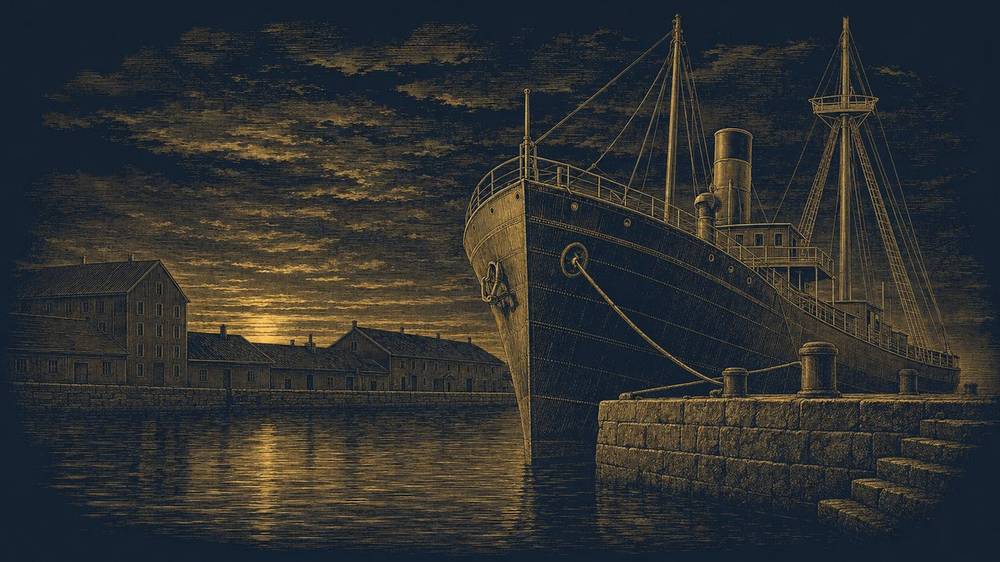
Libau / LiepājaThe port both crossings sailed from — drawn from the record.S.S. AusoniaBrought the Gedanke line over, 1925.Departure for AmericaThe Gedanke family, leaving Poland.The Great Hall, Ellis IslandWhere Max — and later Gitte's own crossing was inspected — passed the line.
Chapter IV
America — shoes, wigs, and real estate
Milwaukee first: the family storefront, naturalization by 1920, a family of working retailers. Then the leap.
Speculative · why Milwaukee?
A guess at the reasoning, not a record of it
No letter or interview says why Max chose Milwaukee. But the pieces on the board suggest an answer worth stating plainly, as a guess: Gertrude's own family — the "uncle... Nankin" the 1914 manifest names near Chełm — most likely had a branch already settled there; chain migration through an in-law already on the ground was the normal way an immigrant with no capital picked a city. Milwaukee in 1913 also had one of the country's largest Eastern-European Jewish garment and leather-goods trades, which fits a family that would be running a shoe store within a few years of landing. And it sat close enough to Chicago's wig and hair-goods wholesalers that Sam Gedanke's Pułtusk sheitel craft, arriving a decade later through Helen, had a ready market waiting. None of this is documented directly — it's the shape the facts make when laid next to each other — but it is a better-than-random guess, and it is the kind of question a Milwaukee city directory or a naturalization sponsor's name could still answer directly.
1913–1914
Milwaukee
Max lands January 1913; Gitte and the boys follow via Vermont in March 1914. City directories place him repairing shoes at 967 Grant St. by 1915, then Muskego Avenue through the 1920s, before the family settled at 5717 W. North Avenue as Hi-Mount Shoe Co.
1940s–50s
The shoe store and the "twin"
Phillip runs the family shoe store; the wig store sits next door. Helen ran both at once — customers swore two sisters worked the block.
Oct 11, 1942
Phillip marries Helen Chaja Gedanke
The Włodawa line and the Pułtusk line join — and with Helen comes the wig trade itself, inherited from her father Sam Gedanke.
1967
Hi Fashion Wigs, Oklahoma City
Mike, 24, takes the family trade national: imports directly, franchises the model — 65 stores at peak.
late 1970s
A small, warm assist
Mike had already taken the wig trade national and moved into multifamily and syndicated real estate on his own. When rising interest rates squeezed those deals, Phillip and Helen helped — selling some furniture and other things to bridge him through. Phil was charming and warm; Helen was the hard worker of the two, and very funny — that, more than any one story about money, was who they were.
1980 → 2021
Cedars-Sinai, four generations
Jay (1980), then Jaxon (2017), Olive (2019), Finn (2021) — all born at Cedars-Sinai, Los Angeles.
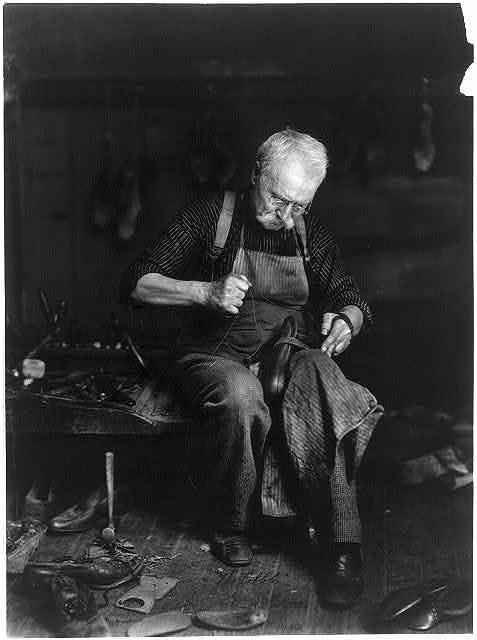
The first groundMilwaukee, 1913 — drawn from the record.The trade Max carried overA cobbler's bench, c.1901 — the same craft, not the same man.The new-world citiesOklahoma City → Los Angeles, 1967–today.
Chapter IV¾ · The First Ground
Milwaukee — shoes on one side, wigs on the other
For half a century Milwaukee was the whole American story. Everything after — Oklahoma, Texas, Los Angeles — grew out of one block.
The family storefront
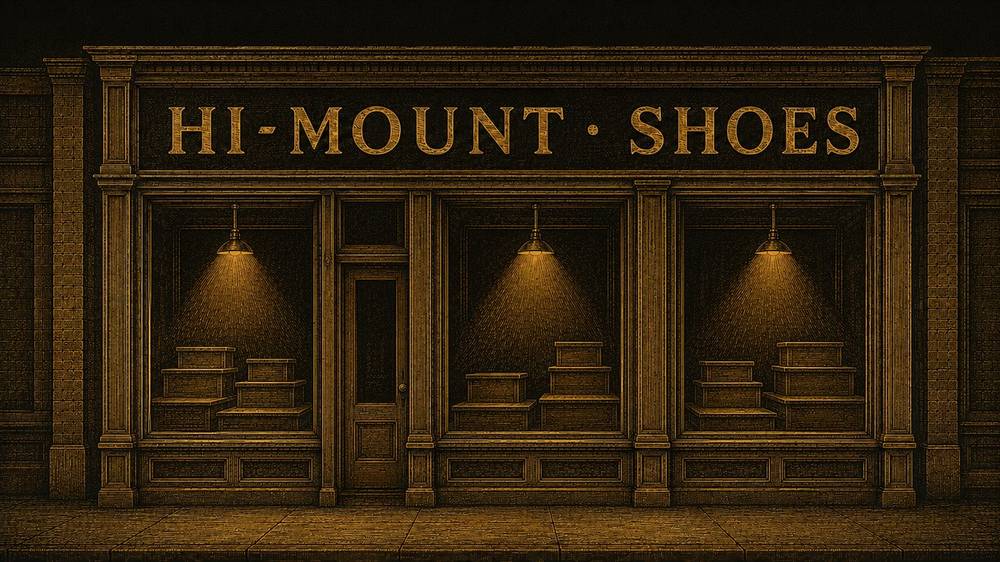
The family kept a shoe store and a wig store side by side — two narrow storefronts, one family working both. The shoe store was Phillip's trade, taken over from Max; the wig store was the craft Helen carried from her father, the Pułtusk sheitel-maker Sam Gedanke. The business had a name — Hi-Mount Shoe Co. — which Max wrote on his own 1942 draft card, self-employed, retail, at 5717 W. North Avenue, the same address on Phillip's own 1940 card. Family memory also carries an earlier address, "1369 8th Avenue," but no Milwaukee directory checked 1915–1927 shows it; the documented chain instead runs 967 Grant St. (1915) to Muskego Avenue (1918–24) to North Avenue. The arrangement people remembered, two doors and one family, ran under the Hi-Mount sign.
Helen and the "twin"
Helen worked both stores at once, crossing between them all day, so quick that customers were sure there were two of her: "Your twin just helped me next door in the shoe store." One woman, two trades, a block of the city she ran on her feet.
Becoming citizens
Max was naturalized in Milwaukee by 1920 — fixed by his son Jacob's derivative certificate, #1836317, issued 9 November 1920. Within seven years of landing they were Americans on paper as well as in fact.
The two congregations
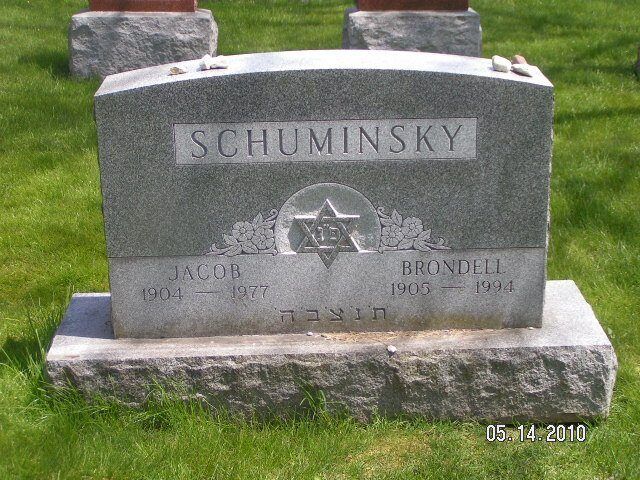
Beth El Ner Tamid married them — Phillip and Helen in 1942, nephew Norman in 1954, both under Rabbi Louis J. Swichkow. And Agudas Achim in Cudahy — organized 1919, first burial 1923 — became the family ground, where Max, Gertrude, and Jack all lie.
Where
Who / when
What the record shows
5717 W. North Ave
Hi-Mount Shoe Co.
Shoe store + wig store, side by side — Max's, then Phillip's
776 16th St
Jack · 1930
Foreman, rubber industry; wife Brondell
2803 N 56th St
Jack · 1940
Salesman, $2,400/yr; son Norman, age 9
5448 N Hollywood Ave
Jack · 1950 · Whitefish Bay
Owner / President-Treasurer — the climb to the suburbs
The name held across two generations — Hi-Mount Shoe Co., Max's and then Phillip's — until the business became real estate instead.
Chapter IV⅞ · The Brothers
The Schuminsky brothers
Jay's line runs through the youngest, Phillip. But the brothers together are the real story of the generation: how a family of immigrant shopkeepers, in one lifetime, staked one of their own — Mike — into real estate. The center is solid; the edges are graded honestly.
The first across — a ten-year-old on the 1914 crossing. His Milwaukee life is the immigrant climb in three census lines: rubber-factory foreman in 1930, salesman by 1940, his own boss by 1950, settled in Whitefish Bay. Married Brondell Bernstein, born in Odessa, in 1927; son Norman arrived around 1931. The 1940 census catches the household whole: Jack and Brondell at 2803 N. 56th St. with Norman, 9 — and Brondell’s father, Jacob Bernstein, 56, living with them, the Odessa line under a Milwaukee roof. Jack’s line runs on: son Norman — ninety-five and living in Scottsdale, the last person alive who knew the immigrant generation — and through Norman, David Schuminsky and Julie Ellsworth. Jack is buried beside his parents at Agudas Achim.
Phillip — Jay's grandfather 1909–1995
The youngest, and the one who made the rest possible. He didn't inherit Hi-Mount Shoe Co., Max's own shop on North Avenue — he bought it from his parents, the hard way. He enlisted 11 December 1942 in Milwaukee; the Army file (serial 36289454) records him plainly: born 1909, four years of high school, retail manager, married. He held the store for decades and sold late — only when rising interest rates finally made holding on too expensive.
When Mike's own syndicated real estate deals hit a cash squeeze in the late 1970s as interest rates rose, Phillip and Helen helped with a small, warm gesture — selling some furniture and a few other things. Give to your kids while you're alive was the rule he passed down — and one the family kept using: in 1986, at Mike's urging, Phillip and Helen set up an irrevocable trust giving directly to their own great-grandchildren, the same principle extended one generation further while they were still alive to see it matter. Family memory keeps him as a romeo and a worrier — devoted to Helen, never quite at ease, sure enough of that one conviction to bet everything on it. Years later Mike wrote his father's obituary and called him a real estate investor with shopping centers and office buildings — not because Phil built them, but because Mike wanted his father to share in what that belief made possible. A son honoring his father.
Sam — Phillip's brother 1906–1993
Sam Schuminsky (1906–1993) was Phillip's brother — the second of Max and Gertrude's four sons, born between Jack and Phillip. He settled in Hollywood, Florida, near Phillip, and died there at eighty-seven. With his wife Faythe, née Kirsch, he raised two children — Alan David and Donna. Alan carried the family’s real-estate thread to Oklahoma City with Hillcrest Companies, where that cousin line is still active today — the branch most likely to hold the missing photographs. Long carried here as a "probable" brother on arithmetic and geography alone; now placed where he belongs, in the family.
The lost boy Schlioma — or Faiwel
The 1914 manifest carries a fourth little boy who never appears in any record again — most likely a son who died young in Milwaukee, before the surviving cemetery indexes begin in 1923. The Army file that locks Phillip's birth at 1909 tilts the reading: the lost boy is probably Schlioma, born ~1907–08, and three-year-old Faiwel was Phillip himself, under his Yiddish name. A name on a ship's sheet and silence after. Counted here because he was real.
Howard — Mike's brother Phillip's son
Phillip's other son, Howard Schuminsky of Orange County, California. The brothers split the map the way their fathers had — Mike to Oklahoma, Las Vegas, Los Angeles; Howard to Orange County — both carrying the family's retail roots west. Howard (1946–2022) and Patricia's line continues through Lisa Mingoia of Johns Creek, Georgia, and Joshua of Winston-Salem.
The American-born layer Nephews & cousins
Norman (b. ~1931), Jack's son, married Liane Hurwitz at Beth El Ner Tamid in 1954 — the first born on this side of the ocean. Three more names cluster and aren't yet placed: Freda (1889), Sidney (1918), Jean (1922). Each a thread back into the wider family, still being followed.
Chapter V · A Life
Mike Schuminsky — the man who upgraded the product
Born in Milwaukee on 18 May 1943 and raised over the family shoe-and-wig store, Mike carried the wig trade to Oklahoma, then spent a lifetime taking a tired product and making it better than anyone thought it needed to be. He died in Bel Air on 10 March 2011, and his son took the company over at thirty-one.
★ Wigs before Mike
Where the idea came from
Mike didn't invent the wig trade in this family — he scaled it. Sam Gedanke, Helen's father and Mike's maternal grandfather, had worked the sheitel trade in Pułtusk before the family left Poland in 1925. By Jay's account, Mike got the idea for Hi Fashion Wigs directly from his grandfather, then went further — he imported the wigs himself instead of buying through a middleman, turning a craft his grandfather practiced by hand into a multi-state chain. He circled back to the family too: around the same time, he set his own parents, Phillip and Helen, up with a wig store of their own in Milwaukee, right next door to their shoe store. Helen ran both storefronts herself — which, family lore has it, is how she became the customer joke about her own "twin."
★ His name is in the law
Hi Fashion Wigs v. Peter Hammond Advertising (1973)
Still in law school in Oklahoma City, Mike built Hi Fashion Wigs, Inc. into a multi-state chain, riding a wave that — by widely-reported period accounts — had upward of 40% of American women owning a wig at the 1960s peak. As president he personally guaranteed an ad contract and hand-delivered the signed guarantee in Manhattan. When the deal soured, that single act put him before the New York Court of Appeals, which ruled in Hi Fashion Wigs, Inc. v. Peter Hammond Advertising, Inc., 32 N.Y.2d 583 (1973) — a long-arm jurisdiction precedent still taught in law schools. The wig business made case law that outlived the wigs.
A note on the supply chain: a U.S. embargo barred Chinese human hair from 1965–71, so Hi Fashion could not have run its own mainland-China manufacturing in these years, whatever earlier family lore said. The industry-standard pattern for a chain its size was Hong Kong, the era's wig-manufacturing capital — but no source ties Hi Fashion there specifically. Where its own supply chain actually ran stays open.
He wrote the book — literally
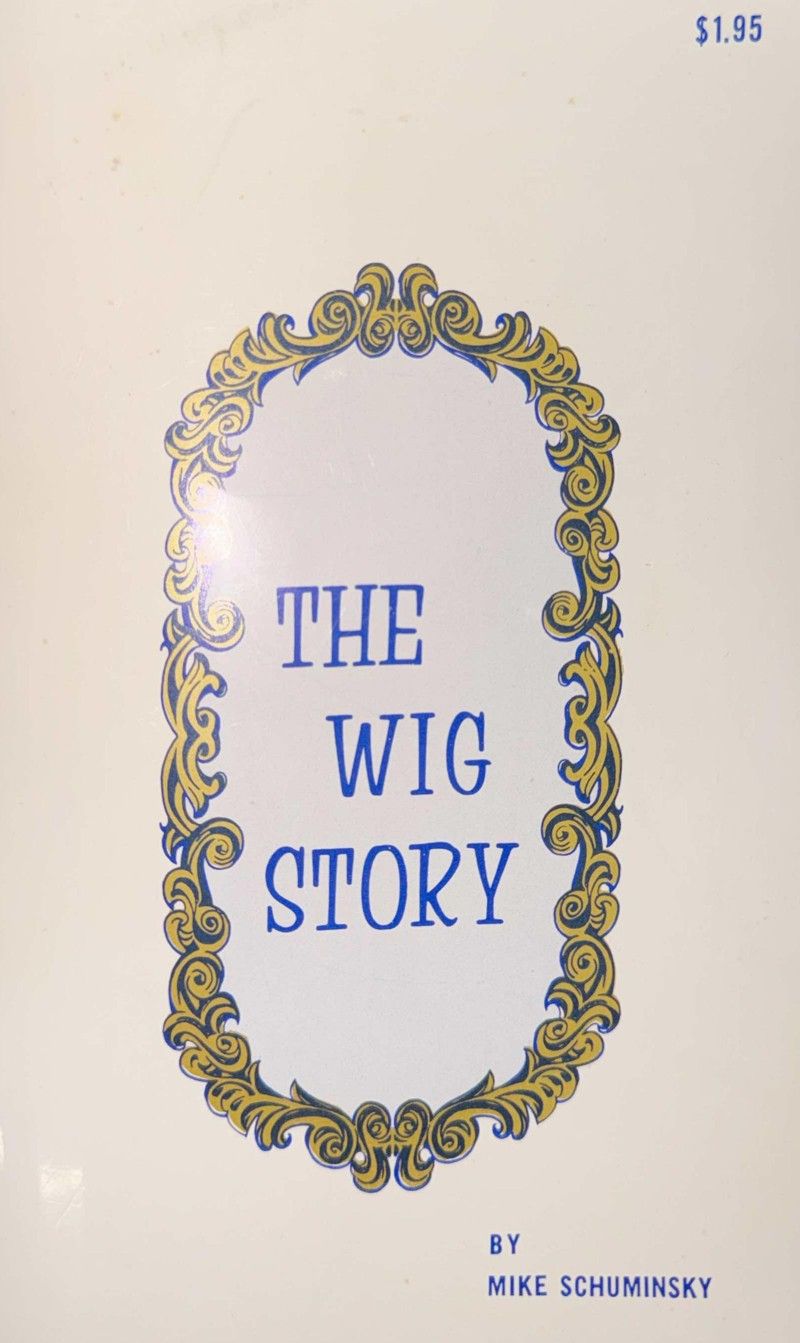
In January 1969, around twenty-five and running stores while sitting in law class, Mike self-published The Wig Story — his own account of the industry he was building in real time. It never reached WorldCat or the Library of Congress; surviving copies are almost unheard of. The family holds one.
Still open today, without him Confirmed by Jay, 2026
Hi‑Fashion Wigs, LLC is genuinely still trading — two stores, Oklahoma City and Edmond, a live storefront and staff. The original February 1967 founding date checks out exactly against family memory. Confirmed directly by Jay: Mike stayed a named owner of the entity, but the business itself went on without him — he hadn't personally worked wigs in 45-plus years, and it kept operating under his longtime partner Malcolm Hall (who died March 2025, age 85 — his own obituary independently confirms the wig business: he "sold and franchised 65 High Fashion Wigs shops" after first selling wigs out of the trunk of his car as a favor to a friend, then went on to a career that included admission to Texas A&M's first Black and female students and decades as an Oklahoma real estate attorney) and co-owner A.W. Clay. Mike's name simply never came off the paperwork. Business directories (BBB, Dun & Bradstreet) date the original May Avenue store's opening to February 1957 — a decade before Mike, born 1943, could have founded it at 24. More likely he took over an existing shop and built it into the 65-store chain than started one from nothing.
All Storage — the better box
In 1994, out of a single lot in Mustang, Oklahoma, Mike founded All Storage and refused to build first-generation self-storage. He pioneered larger, amenity-rich facilities — security cameras, big offices, climate control, drive-thru units. People said no one needed storage that nice. He built it anyway, across Texas and Oklahoma — and grew it into one of the country's premier private self-storage operators.
"Mike Schuminsky, my dad, mentor, and best friend, was a visionary in the self-storage field… Everyone told him nobody needs this nice of a facility. He built it anyway."— Jay Schuminsky, on his father
★ Still in the family
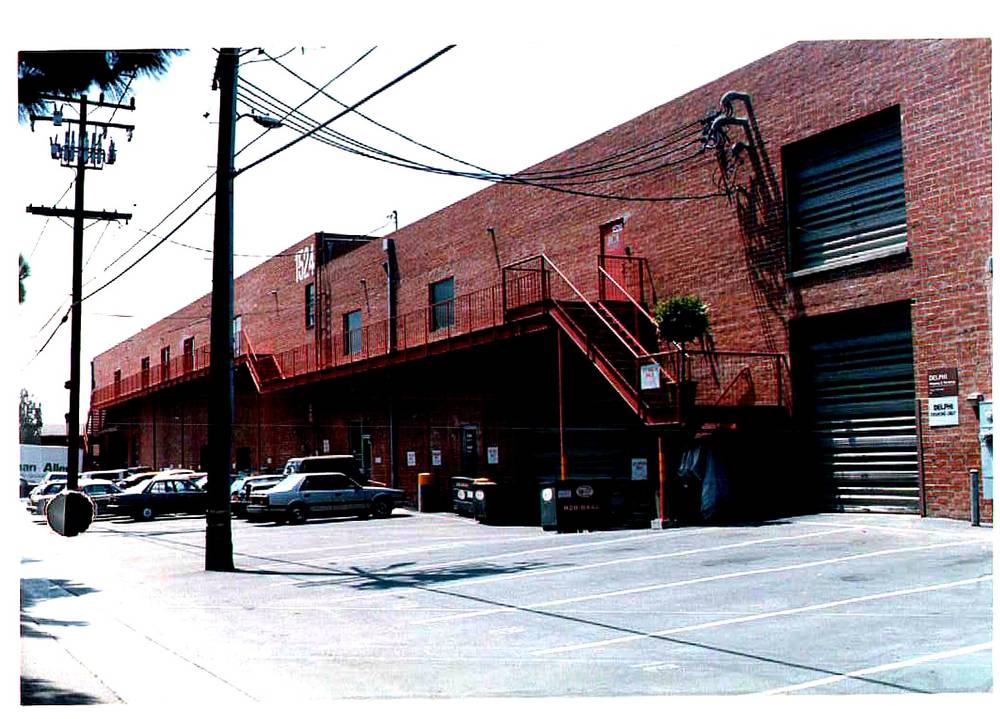
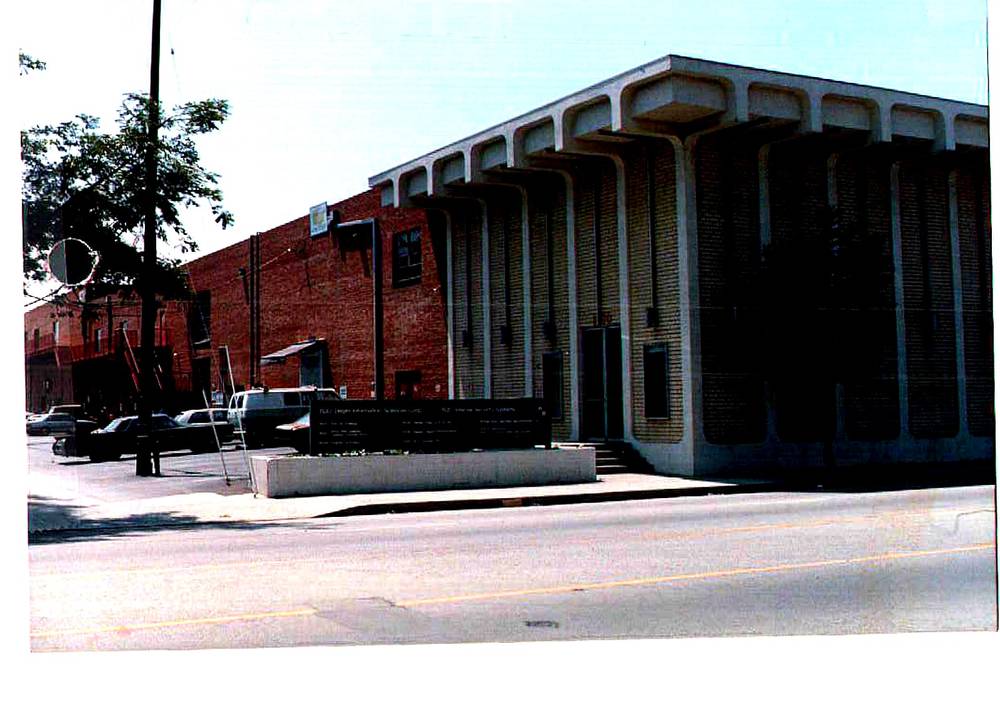
1520 Cloverfield — the building that stayed
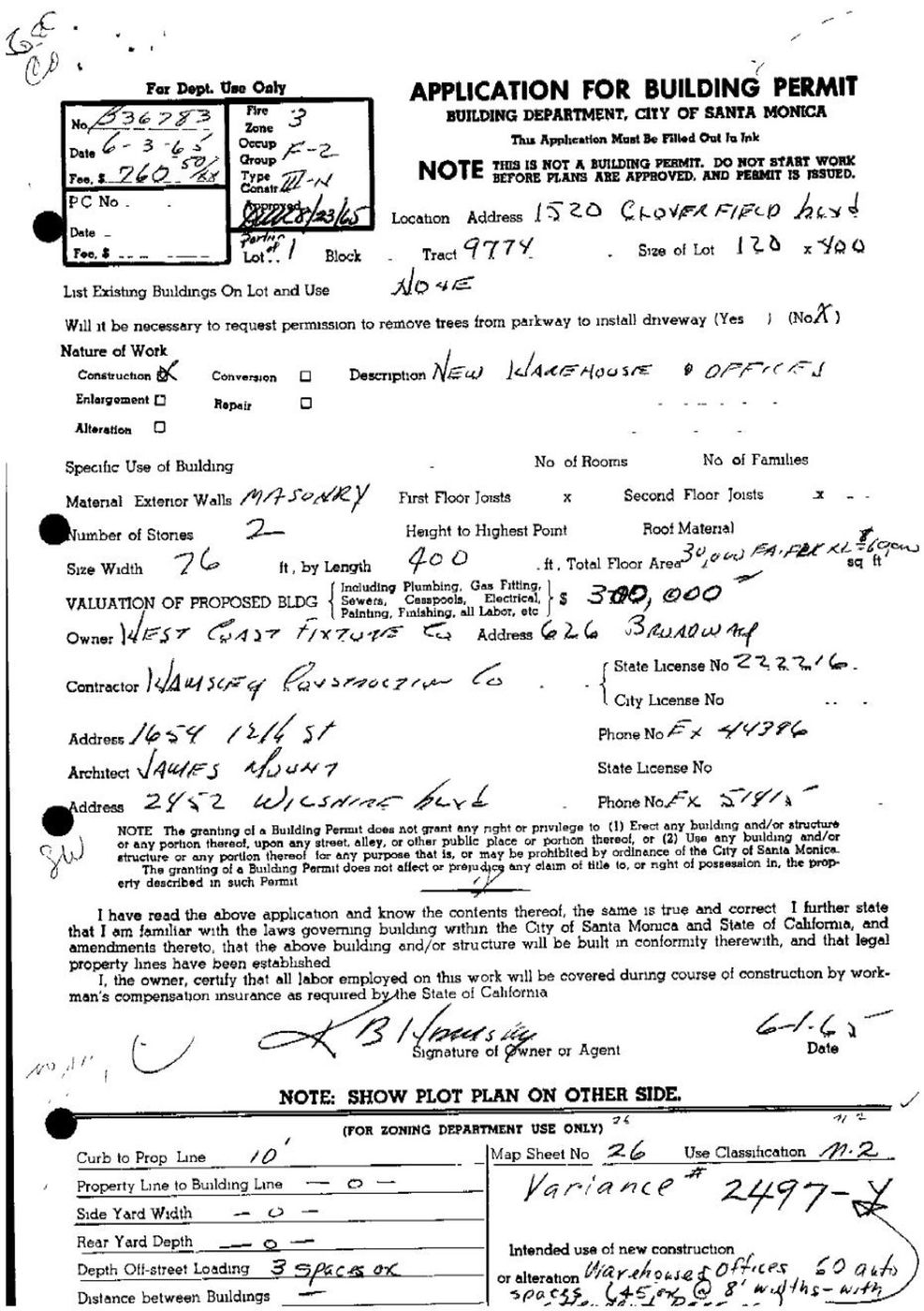
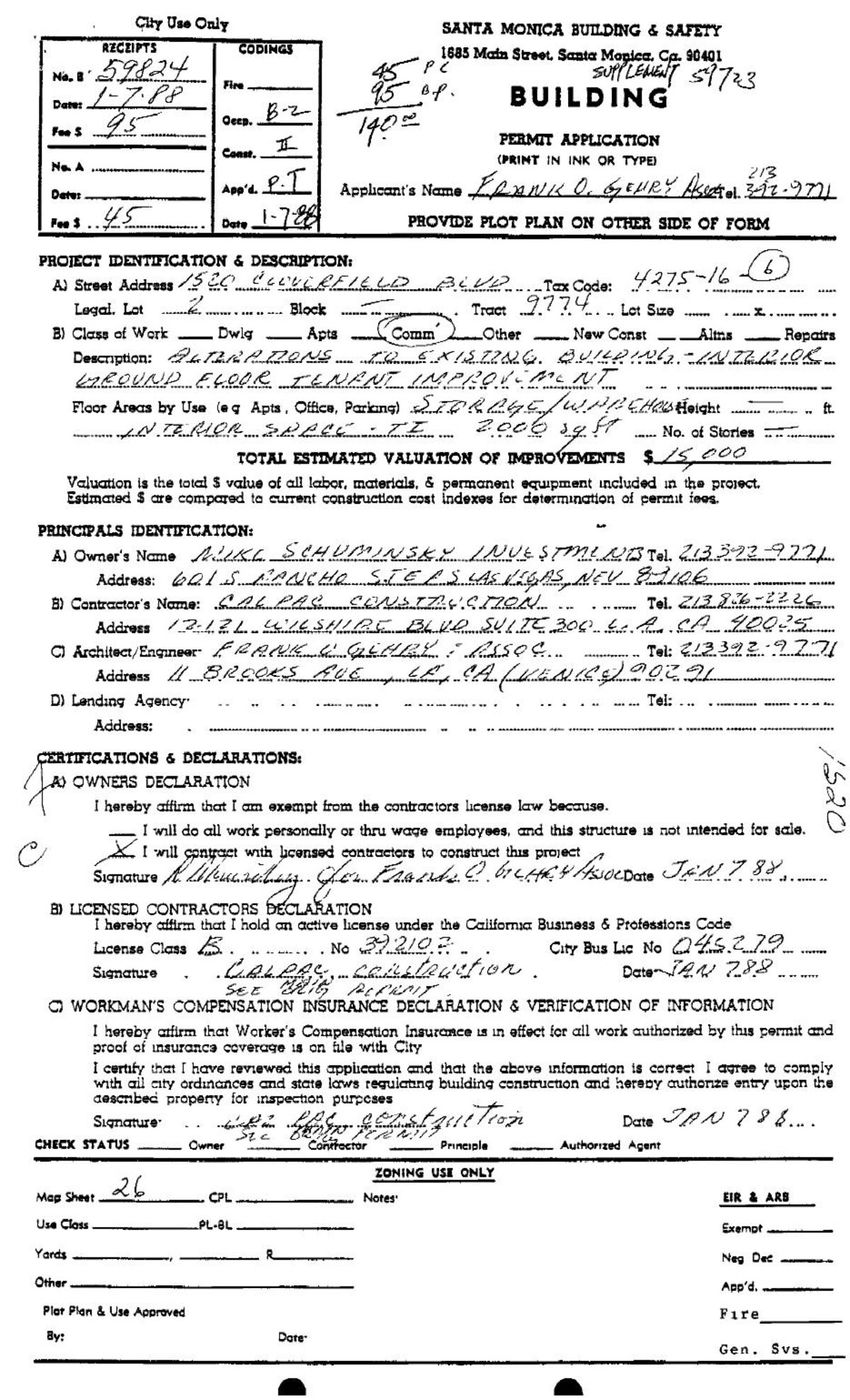
Sam Gedanke — Helen's father — bought the 1966 warehouse at 1520 Cloverfield Blvd, Santa Monica on Dec 15, 1971, four years a widower. Helen took title from him in 1986. Through the 1980s and '90s the ground floor held Hi Fashion Wigs' own storage while Frank O. Gehry & Associates worked out of a loft upstairs.
By 1973 — two years after buying it — Sam himself was living in Santa Monica. Not a pure absentee purchase: he moved near the building.
Why Gehry matters here: by 1987, when he wrapped this brick warehouse in sand-blasted stainless steel, Gehry was already headed toward becoming the most influential architect of his generation. Two years later he won the Pritzker Prize — architecture's highest honor. A decade after that came the Guggenheim Museum Bilbao, then the Walt Disney Concert Hall a few miles away downtown — both now among the most photographed buildings on earth. What makes 1520 rarer than either of those: Gehry didn't just design it, he worked out of it, as a tenant altering a building for his own landlord — a combination that exists almost nowhere else in his career — and it's one of the very few Gehry-altered buildings from that era still standing in private hands rather than a museum or a corporate campus.
By family account, 1520 was also the first building Mike ever got his own financing on — after Hi Fashion Wigs made him successful through the '70s, the loan on this building is what let him start syndicating and developing real estate of his own. Everything that came after built on that first loan.
The decade has a quieter side too. In the late 1970s, Phillip and Helen helped Mike through a cash squeeze by selling some furniture and a few other things — a small, quiet gesture, and by every family account exactly the kind of generosity Phil and Helen were known for. Grandma Helen had a phrase for it, as Jay remembers: "family first." It's a generosity the generation before them couldn't have afforded. Max and Gertrude arrived with nothing and spent their lives building just enough to hold — a shoe store, a roof, four sons raised over it. Phil and Helen, one generation removed from that struggle, finally had something to give away, and their instinct was to give it rather than hold it: first the furniture, then in 1986, at Mike's own urging, an irrevocable trust handing straight down to their great-grandchildren while they were both still alive to see it used. Give to your kids while you're alive — the rule Phillip passed down, and the one the family kept using.
The building as Sam bought it — brick warehouse, red fire-escape stairs, circa late 1980s.
The same corner, still the old building — before Gehry's 1987 recladding.
Permit B36783, June 1965 — the original building.
Permit 59723, Nov 1987 — Gehry's own filing to alter his office.
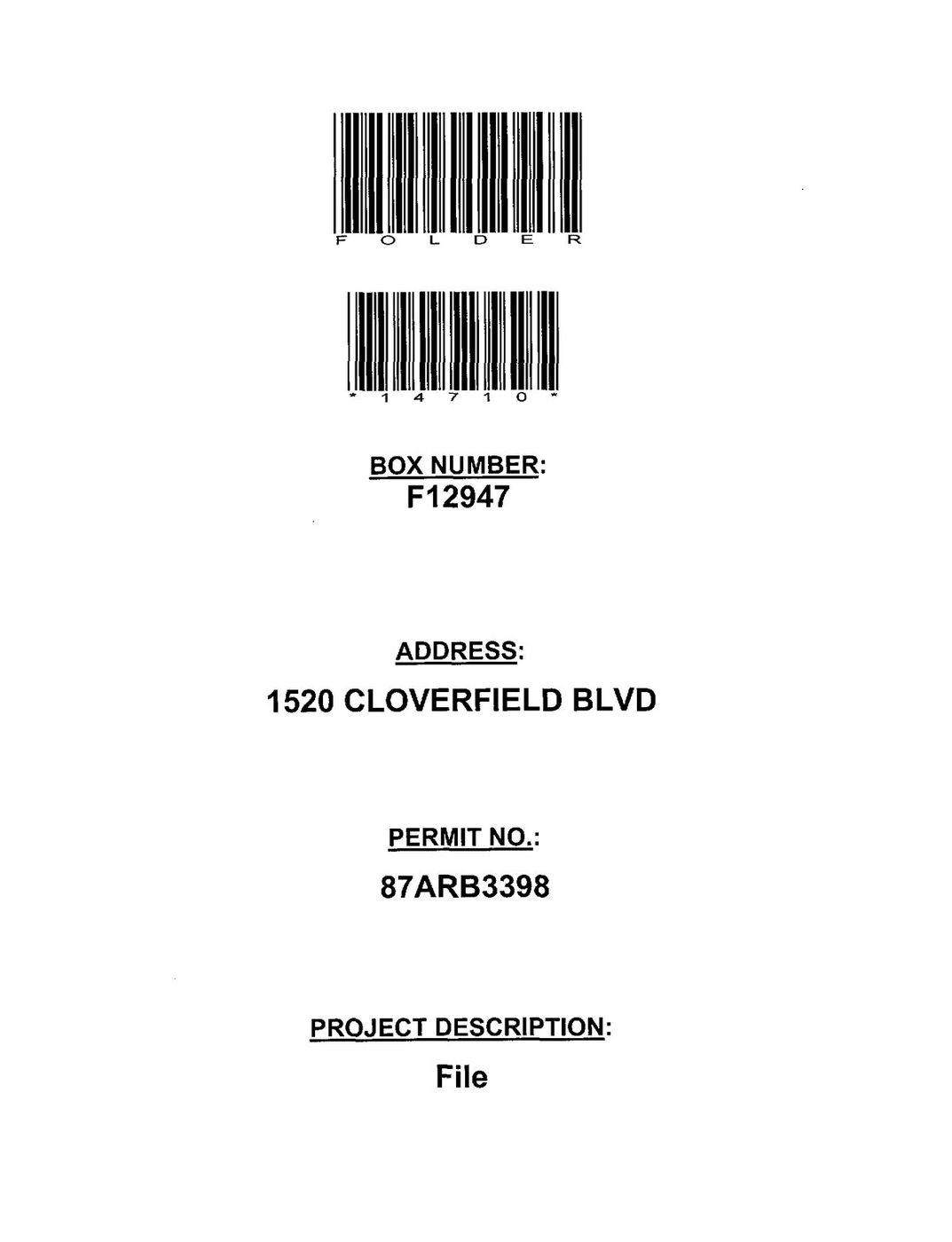
ARB Case 87ARB3398 — the stainless-steel canopies, approved on appeal.
"That first loan is what let my dad start building everything else that came after. It's still ours today, four generations on — and that's something I'm genuinely proud of. It says everything about how tied together this family has always been."
— Jay Schuminsky
·
The man himself
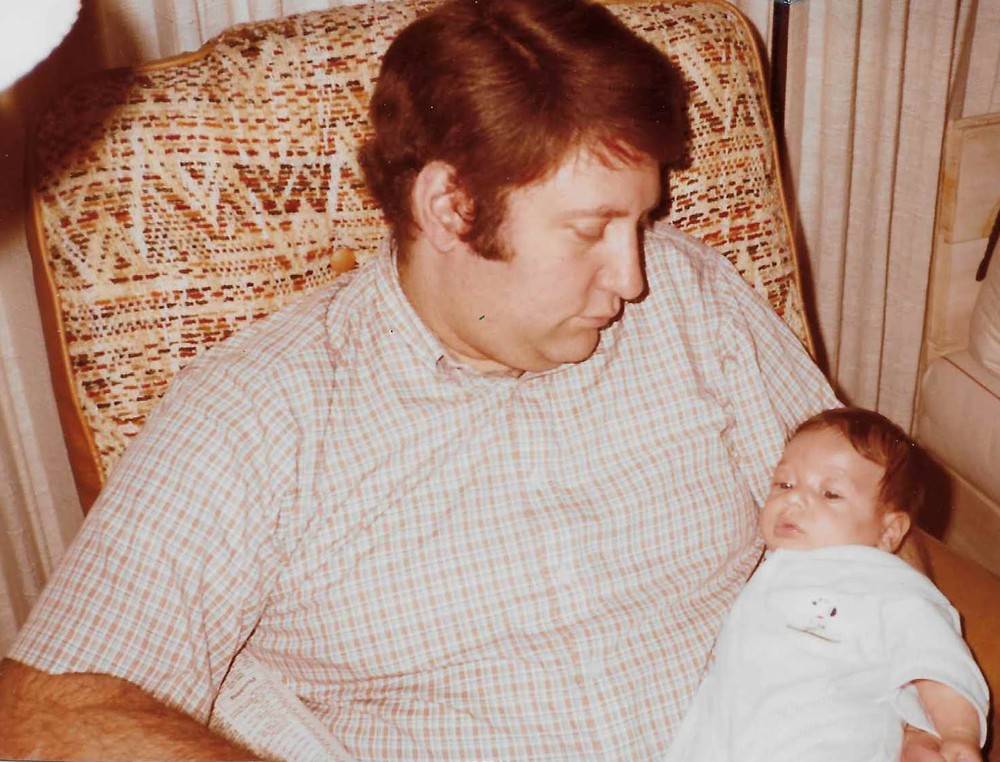
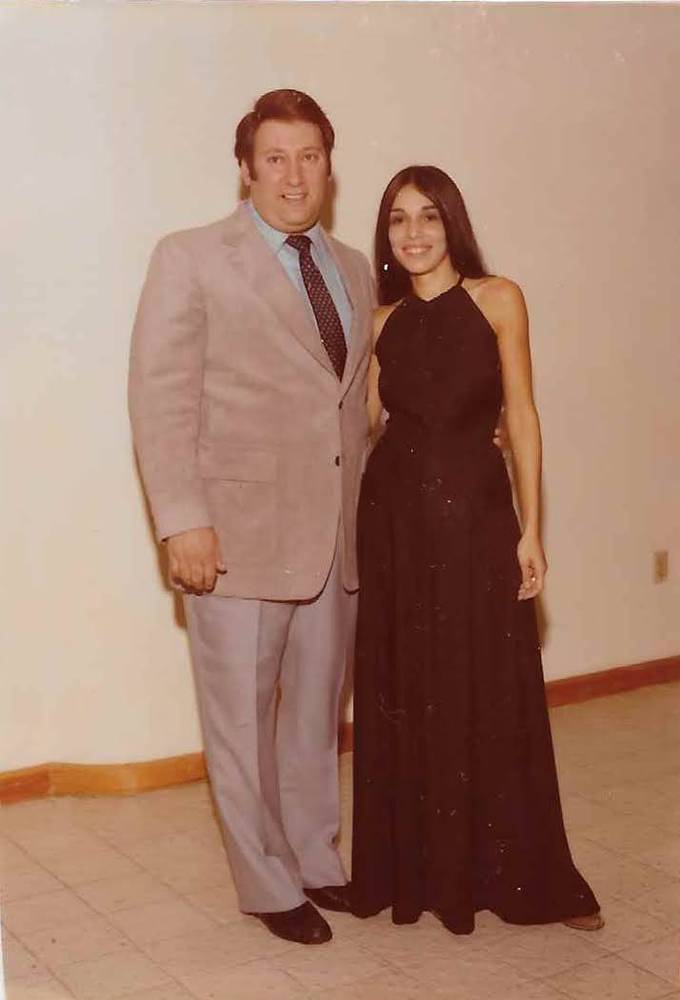
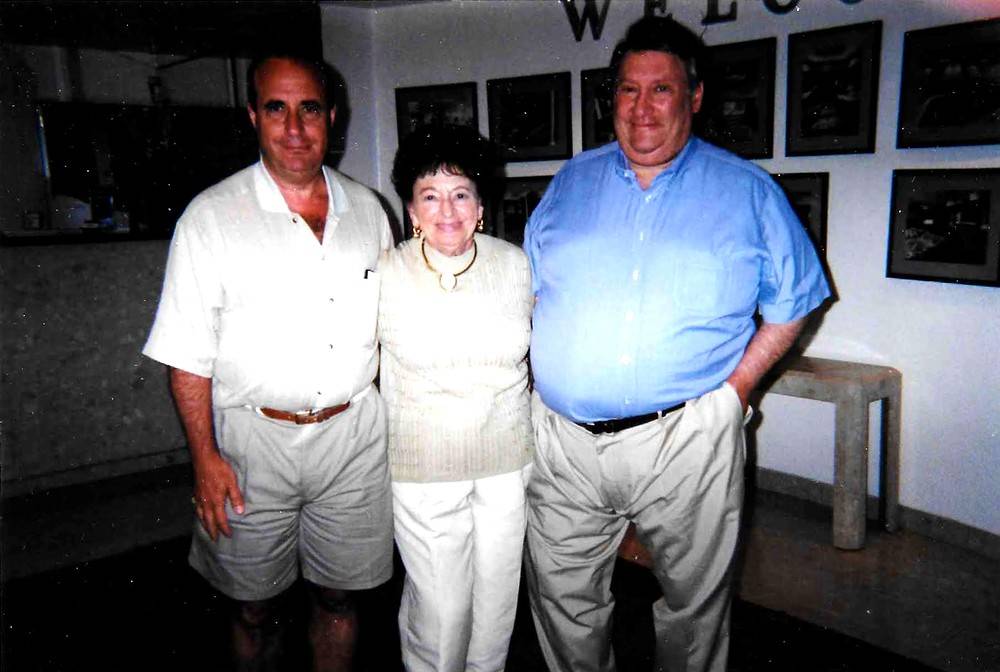
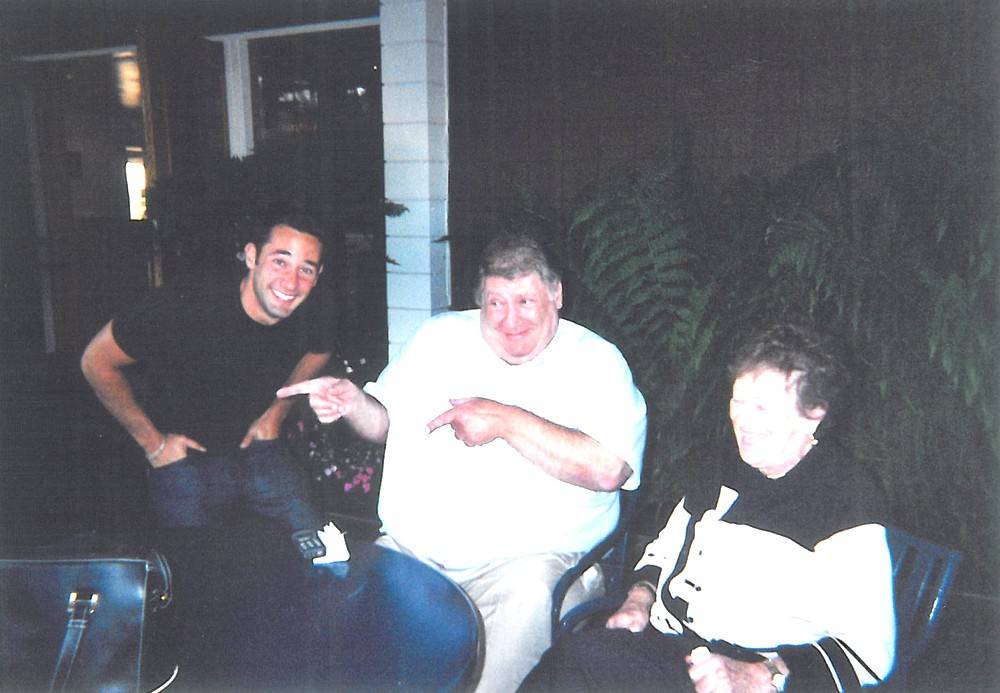
Mike & Jayas a newborn.Mike & LeslieJay's mom, dressed up for a night out.Mike, Howard & Grandma Helenthe two brothers, with their mother.Jay, Mike & Grandma Helenthree generations, mid-laugh.
A deli family
Mike was a deli man, the way his parents were before him. Pastrami and corned beef, a good rye, a counter that knew the order before you gave it — the family's table from Milwaukee on down. The businesses changed every generation; the food did not. One of the small permanent things, carried from a near-South-Side storefront all the way to a table in Los Angeles.
The sayings he kept
He had a few lines he came back to, and they fit him. "The great ones never lose it." And "the apple doesn't fall far from the tree." He meant them as a standard and as a wager on his own — and on the evidence, he was right on both counts.
He had a huge presence — in the world, and in his son's life. The companies and the case law are the public record. The private one is simpler: a father, a mentor, and a best friend, whose standard outlived him.
Chapter VI
The lines that married in
Four branches feed the family besides the Szumiński patriline — two on Jay's paternal side, two on his maternal side.
Gedanke Paternal
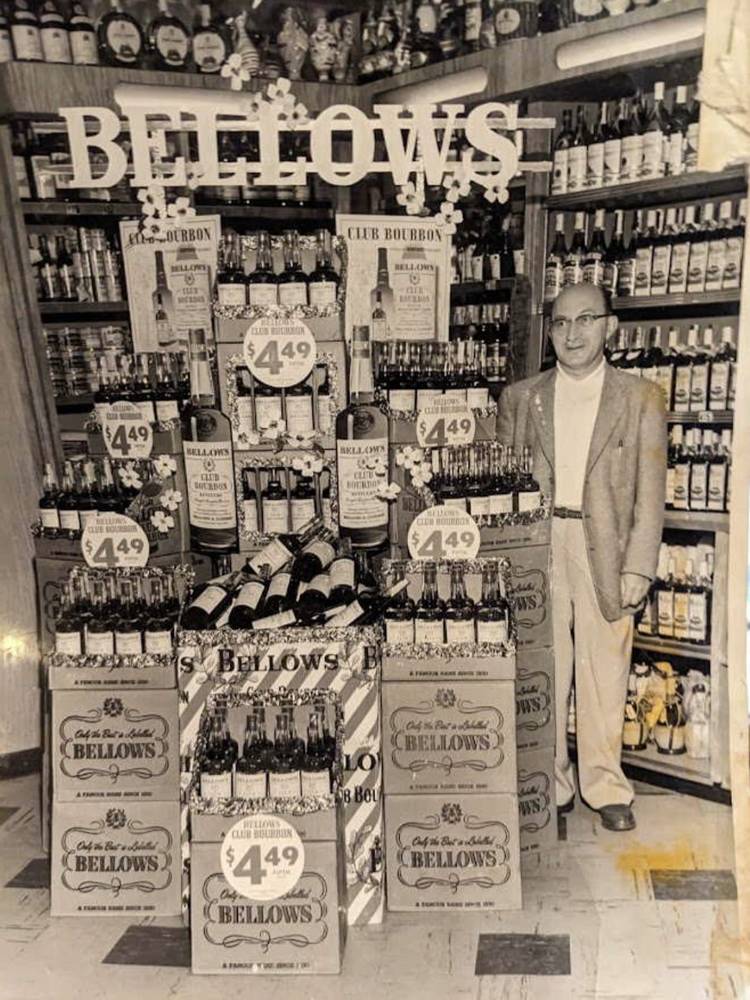
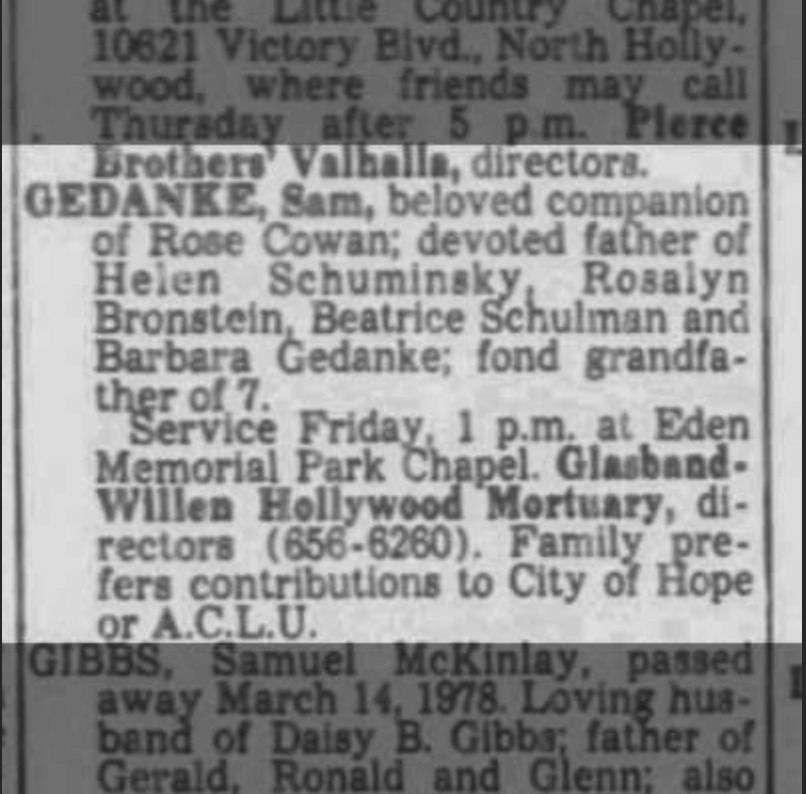
Sam Gedanke (1899–1978), sheitel-maker of the Pułtusk district; married Anna, Feb 1918, Różan. Four daughters: Helen Chaja (1919–2014), Rosalyn, Beatrice, and Barbara. Sailed to Ellis Island on the S.S. Ausonia, December 1925, Helen age six. Fort Atkinson WI by 1930; Helen to Milwaukee and Phillip by 1942; Sam ran a Los Angeles liquor store and bought the Cloverfield building in 1971. Widowed in 1967, he spent his later years with a companion, Rose Cowan. His own LA Times obituary called him "fond grandfather of 7." Anna's own family, only recently traced, carries the harder half of this history. Born Anna Ruza in Pułtusk on 25 December 1895, she died 6 February 1967 in Los Angeles and is buried at Mission Hills; her father, Mordacai (Mordka) Ruza (1871–1939), died in the town itself, just before the war reached it, and her mother, Rivka Blumstein (1871–1941), died there in 1941 — tagged in the family's own record as forced exile, part of the Holocaust. Anna had at least seven siblings. Two brothers, Abraham (1897–1942) and Sholem (1906–1943), were driven east into Soviet Kazakhstan and died there; a sister, Esther (b. 1908), died before 1939 in Pułtusk, and another, Lea (1903–1920), young and before the war ever came. Two sisters survived and scattered further still — Henia (1905–1963) to Tel Aviv, Dyna Szosza "Sylvia" (1899–1963) to Los Angeles, the same city Anna herself had already reached. The Pułtusk Ruzas were scattered and half-destroyed by the war; what's left of them is now spread across three continents.
Nankin & Handelman Paternal · confirmed 2026
Gertrude "Gitl" Nankin (1879–1971) — Max's wife, née Nankin, per her own headstone (an old, unrelated tree entry once had her as "Finkel" — no relation to Jay's actual Finkel line, his mother's side, below). Parents Aaron Urish Nankin (Aharon HaKohen, 1858–1933) and, per a family descendancy chart received in 2026, his first wife (unnamed) — Aaron's second wife was Gela Gitl Jennie Friedman (1869–1931). The HaKohen priestly line runs through here — a separate, Y-DNA-testable marker. The 1914 manifest's "uncle Nankin" near Chełm is her family, and the same chart places multiple Nankin siblings and cousins as born in Ruda Huta — the same village the family's own 1914 manifest gives as their last address, now doubly confirmed. One cousin, Reizel Nankin (b.~1903, Ruda Huta), stayed and died at Sobibór — a direct, named loss on this side of the family, not only Max's.
Weisbrode Maternal
Edla Dweyra Weisbrode (b. ~1827) married Manel in 1848 and is Moszko Aizyk's mother. Her line runs back through Szmul Leib Weisbrode (1798–1841) and Ester Herszkowna (1761–1836) to Hersz & Ryfka, born around 1735 — the oldest named ancestors in the tree (maternal side).
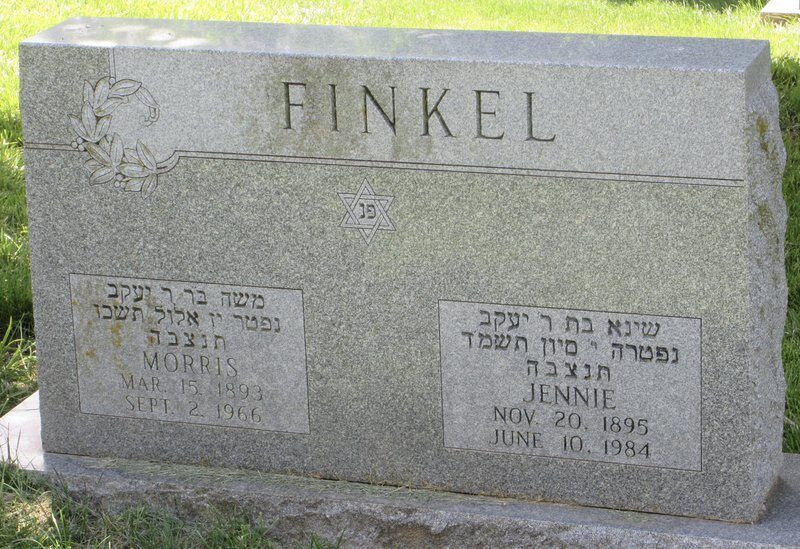
Finkel & Loeb Maternal · hometown found 2026
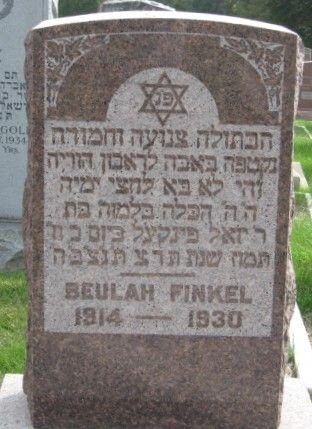
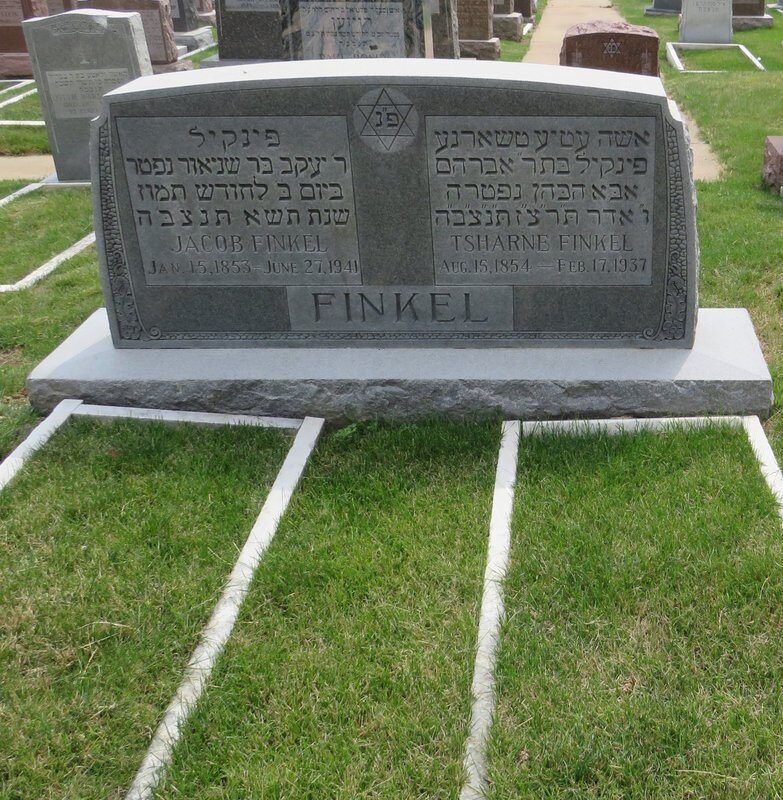
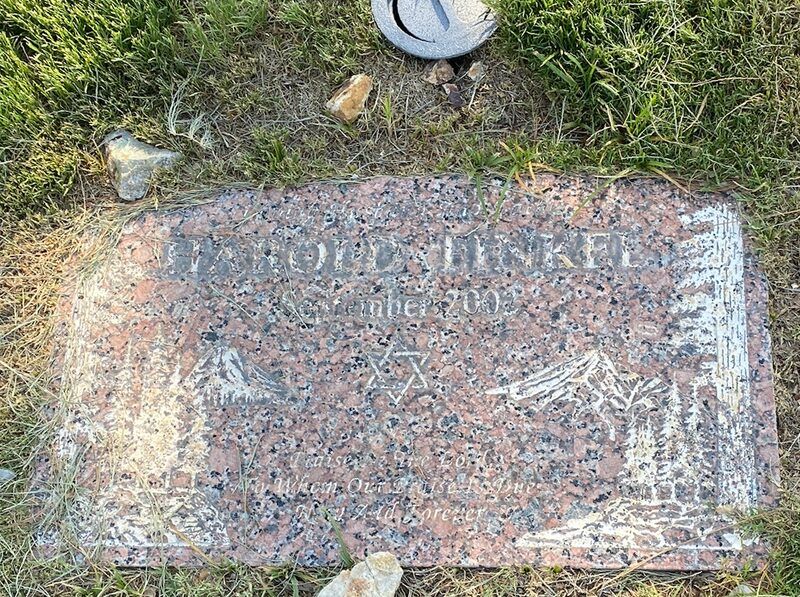
Jay's mother Leslie Joan Finkel (b. 1949, Council Bluffs, Iowa) descends from Jacob Finkel (1853–1941), an Omaha grocer ("Finkel & Son," 834 N. 27th St.) and, per his own 1902 arrival papers, a trained cabinet maker; son of Shneur; through Morris Finkel and Jennie Eisen; to Harold Finkel (1917–2002) and Lillian Loeb (1924–2006) of Las Vegas. The European hometown, listed everywhere in the American record as just "Russia," reads in Jacob's own handwriting on his 1902 ship's manifest: Sharhorod — one of Podolia's oldest and largest Jewish communities, a center of early Hasidism founded in the 1580s.
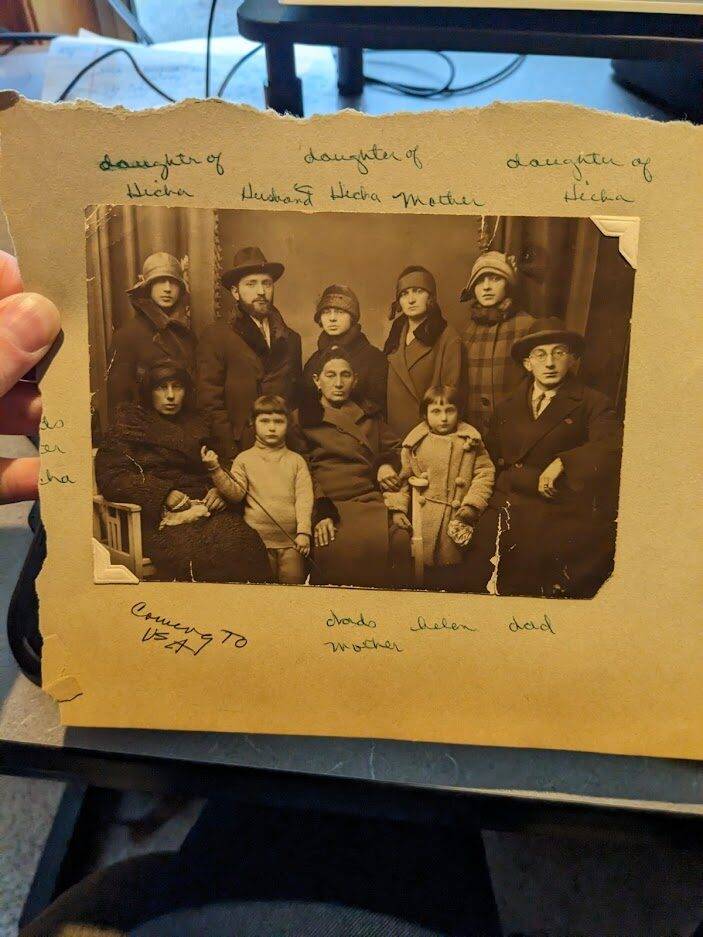
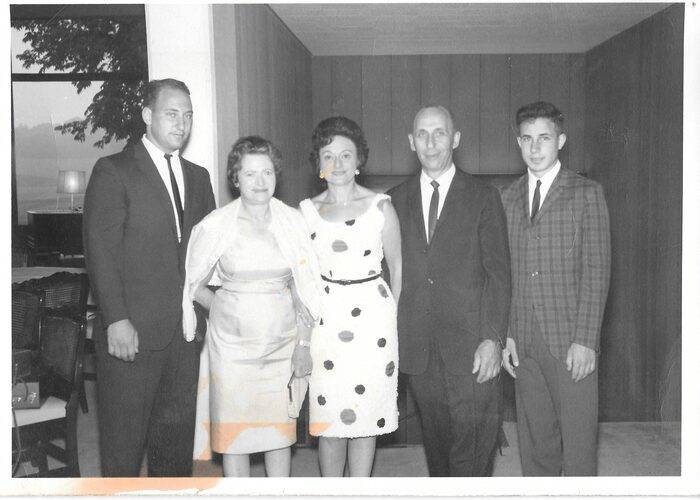
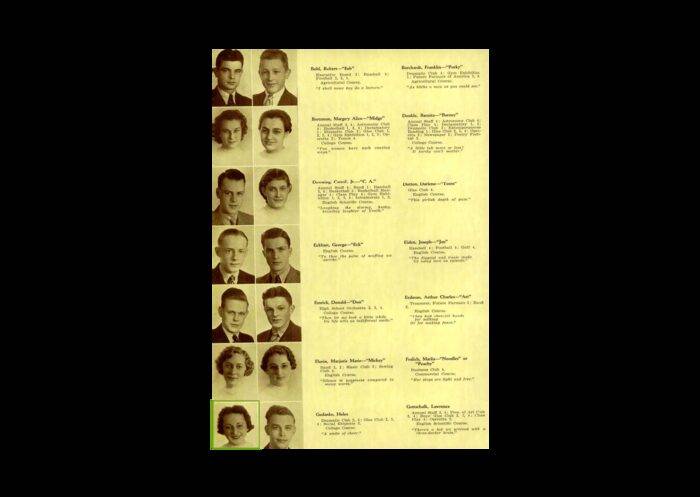
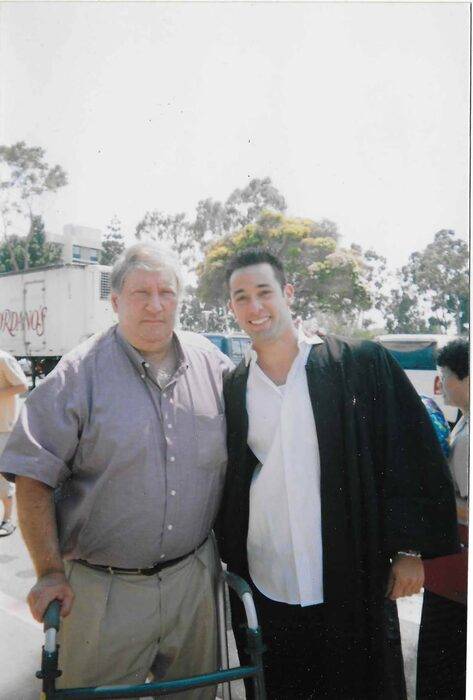
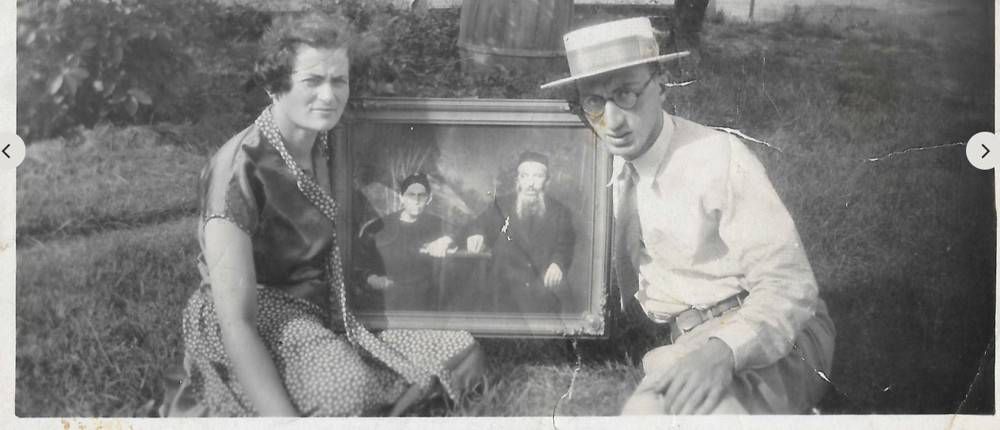
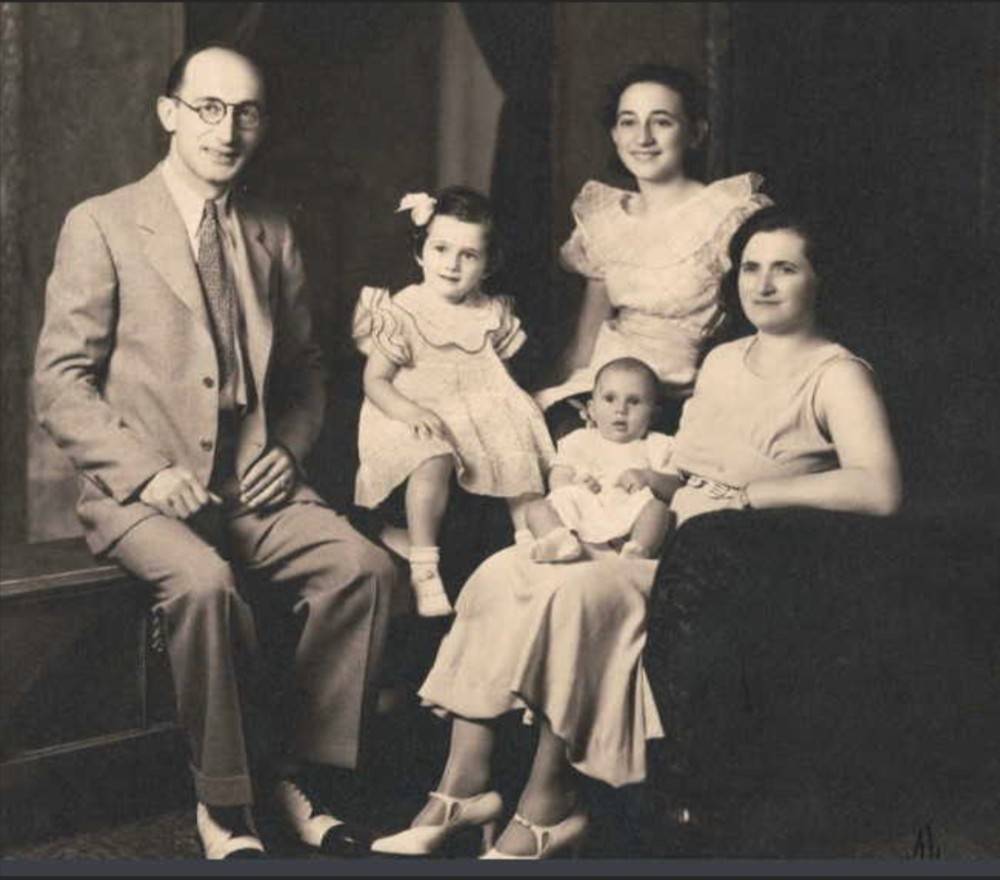
Pułtusk & RóżanWhere Sam Gedanke made sheitels — drawn from the record.Helen Chaja GedankePułtusk, 1919 — Milwaukee, 1942.Fort Atkinson HS, 1937A Pułtusk girl, now a Wisconsin teenager.The Gedanke familyThe Pułtusk wig-makers.Helen & Phil SchuminskyThe lines joined, Milwaukee.Brondell BernsteinJack's wife — from Odessa.Tsharne SilechnikDaughter of Avraham Abba HaKohen.Morris Finkel1893–1966 · Council Bluffs.Beulah FinkelJacob's daughter — the Omaha line.Helen GedankeFrom the family collection.Jay & MikeUCSB graduation, father and son.
Sam's liquor storeLos Angeles, matches his 1950 census occupation.Sam & Anna, 1939Holding a photo of Sam's own parents.The whole family, c.1933The earliest known photo of Helen.LA Times, Mar 16, 1978"Fond grandfather of 7."
The Other Half
Jayme's side — Tolan & Harner
Jaxon, Olive, and Finn carry two families. Their mother, Jayme Tolan (b. 14 March 1982 — Pi Day), grew up in Reisterstown, Maryland. Her side reaches back through colonial Pennsylvania, not Włodawa — and holds a turn of its own. Jay's own words for her, on the record here: the love of his life, and his soulmate.
JayThe one who commissioned all of this.JaymeTolan & Harner — the other half of the story.
James Carroll Tolan Adopted
Jayme's father, Dr. James Carroll Tolan (1953–2010), was born in Washington, D.C., adopted as an infant, and raised on Philadelphia's Main Line by Henry Levick "Hank" Tolan and Anita Marie Carroll — his middle name, Carroll, is his adoptive mother's. He took a degree at Franklin & Marshall, became a clinical psychologist, married Karyn Harner, and raised Jayme and her brother Rob. Because James was adopted, the Tolan surname comes from his adoptive family — a name carried by family rather than by blood. His biological parentage is sealed, so the children's deeper ancestry on this side runs through their grandmother Karyn Harner's people.
Harner & Bloser — the Pennsylvania line Bloodline
Jayme's biological line on this side runs through her mother, Karyn Harner — an only child of Robert A. Harner (1928–2018) and Janet Bloser (d. 2006). It is Janet's side that reaches deepest: a Pennsylvania-German family — Bloser, Jauss, Negley, Burkholder, Knettle, Davidson — documented back through colonial Pennsylvania to the Swiss-German Mennonite families who settled Penn's Woods (Wanner, Funk, Musser, Kendig, Hershey, Landis) and, deepest of all, to Hans Wanner, born 1656, with Anna Maria Wacker and the Mennonite bishop Heinrich Funk among them — about twelve generations, nearly three centuries before Max ever sailed. Robert's own Harner line, an open thread for a year (a same-name, same-region Robert Harner, 1927–2021 Boyertown/Exeter, was checked and ruled out in 2026, wrong wife and children), resolved in July 2026: his parents were Howard W. Harner and Ruth E. Marley, married 1923 in Marietta, Lancaster County — and his grandparents, Albert Franklin Harner and Barbara Welfley, from the same county. The two families turn out to be the same Lancaster County German-American world on both sides of Robert and Janet's marriage, not two disconnected lines as it first looked.
Jay & JaymeMarried 3 Sept 2016, Santa Barbara — the two halves, joined.Still goingA decade in, and counting.
Two worlds in three children. Jaxon, Olive, and Finn are the meeting point of a Włodawa patriline that survived Sobibór by a single early crossing — and a colonial Pennsylvania-German line on their mother's side, and a father chosen, not born, into the Tolan name. Both halves are theirs.
The Ninth Generation
Jaxon, Olive & Finn
This whole history exists for them. Three kids, three years apart, born a hundred and fifty years and six thousand miles from Włodawa — and every bit as much a part of this story as Herszko or Max. This is their page.
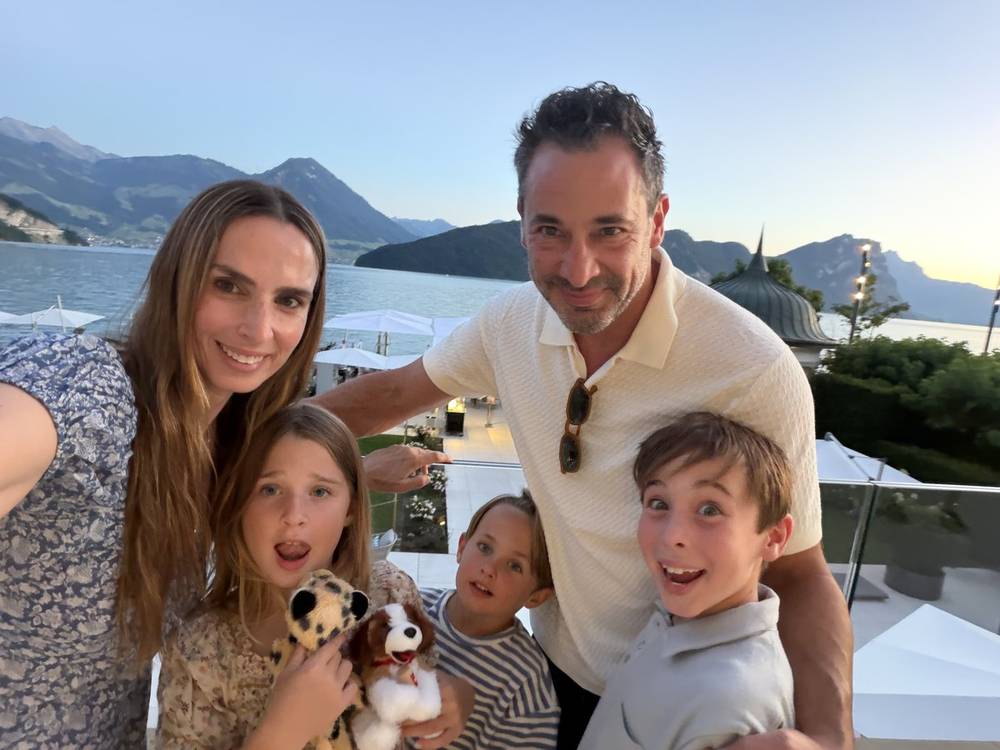
All fiveThe whole reason this whole history got written down.
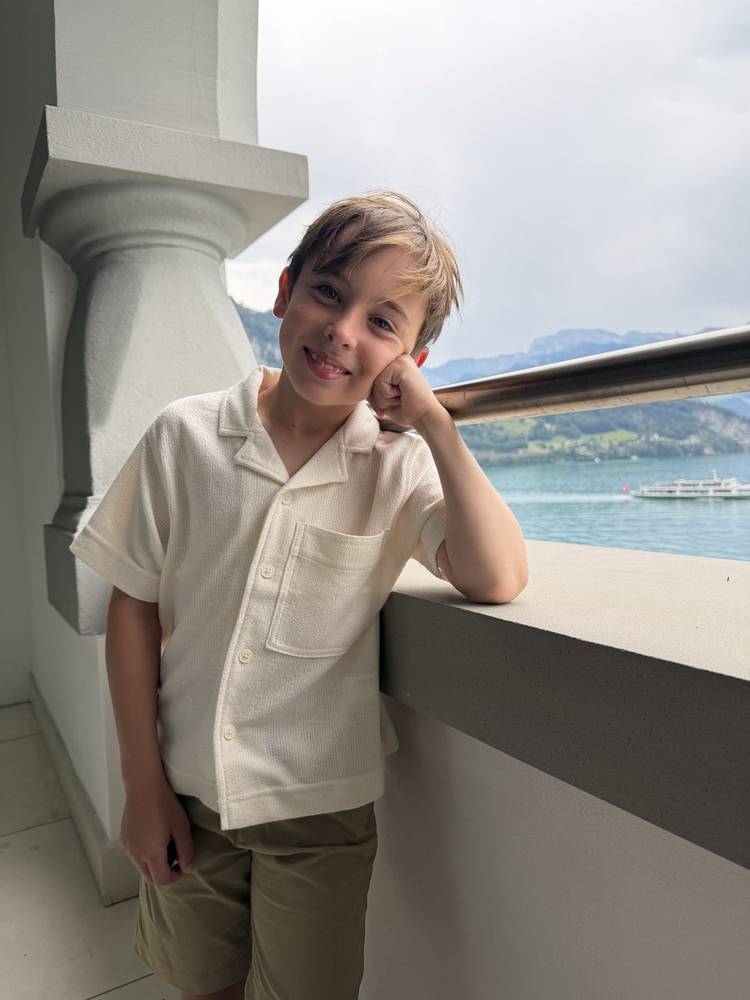
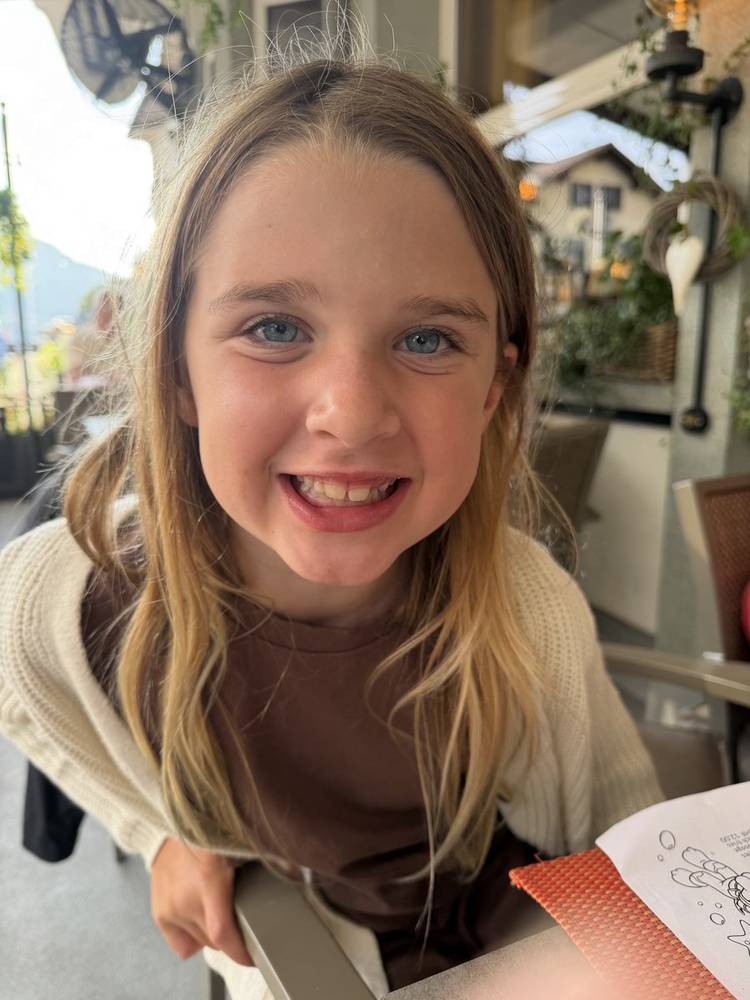
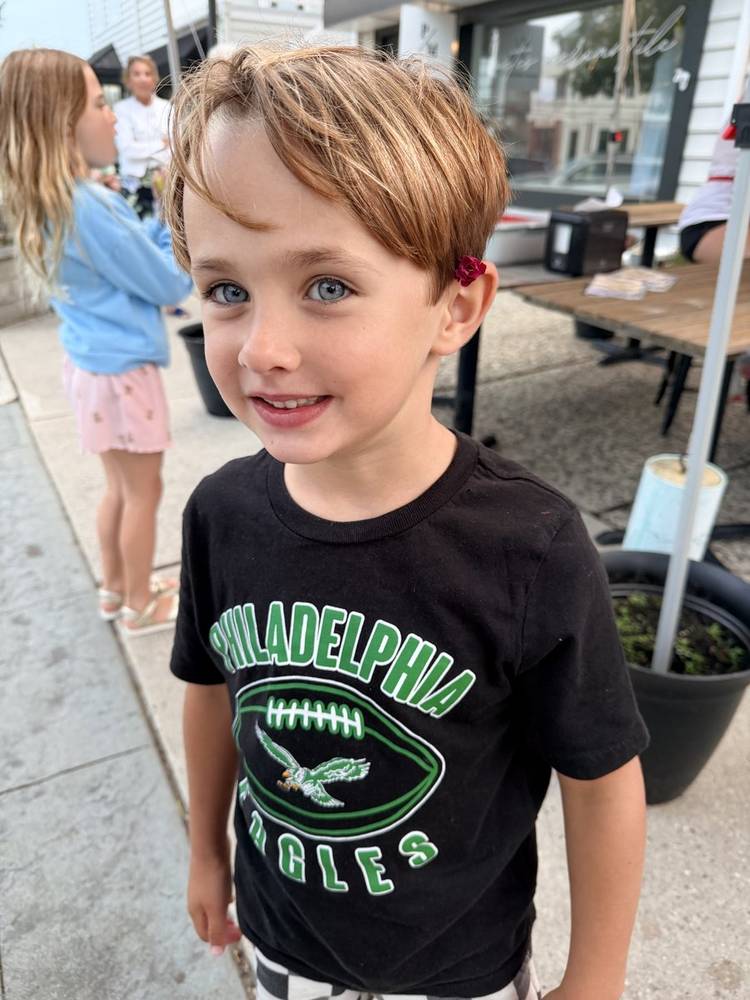
Jaxon MikeBorn 8 Aug 2017 — the oldest, carrying Mike's name forward.Olive JamesBorn 19 Mar 2019 — the middle, carrying her grandfather James's name.Finn JaggerBorn 21 May 2021 — the youngest, and the newest chapter.
Jaxon Age 8, turning 9
Jaxon is the sports kid — baseball, football, and basketball all get equal time, and he's just as likely to be found deep in a Lego build or lost in Fortnite as he is on a field. He's the one who takes an idea and runs with it; ask him to build or invent something and he's already three steps ahead. Named Mike, for the grandfather he never met but whose drive he seems to have inherited anyway.
Olive Age 7
Olive lives in motion — gymnastics is where she channels it, cartwheeling and flipping through the house as much as the gym. She's soft-hearted underneath the energy: a room full of stuffies she's named and knows by story, and an animal magnetism that runs toward every dog and every horse she's ever met. Named James, for the grandfather she never got the chance to know.
Finn Age 5
Finn is all roar right now — dinosaurs, monster trucks, anything big and loud and a little bit fearsome gets his full attention, basketball included. The youngest, and still writing his first chapters — the newest branch on a tree that started with a man named Herszko on a river in Poland he'll never have to think about unless he wants to.
In Memory
Sobibór — those who stayed
Max left Włodawa in 1913 and brought his family over by 1914. The relatives who did not emigrate lived on in the town until the war. This is what happened to the Włodawa they left behind.
✡
Before the war, about 5,650 Jews lived in Włodawa — two-thirds of the town. The Germans entered in September 1939. In spring 1942 they forced the Jewish council to send 150 men to build a camp by the rail station at Sobibór, eight kilometres away; most were killed when the work was done, but two escaped back to warn the others what they had built.
23 May 1942The first deportation from Włodawa to Sobibór.
June 1942Every Jewish child in the town under the age of ten was taken to Sobibór and murdered.
24 October 1942The whole remaining community — some 5,000 from Włodawa and over 2,000 from Chełm — was murdered in the gas chambers of Sobibór.
30 April 1943The last Jews, lured back from the forests on a promise of safety, were deported to Sobibór. The community was never reconstituted.
Hundreds fled to the forests of Lublin province and fought on — the best-known partisan unit led by Yehiel Grynszpan. But the world of the Włodawa registers, the synagogue, the marketplace where Aizyk traded and Manel laboured, ended at Sobibór.
What a Yizkor book is
After the war, survivors of a destroyed Jewish community — usually scattered across Israel, the Americas, and elsewhere — would band together and write a Yizkor bukh ("memorial book," Hebrew/Yiddish), a collective act of testimony for a town whose own records were often burned along with its people. The Włodawa Yizkor book (published by the town's survivor landsmanshaft society) runs several hundred pages in Yiddish and Hebrew — town history, first-person memoirs of the shtetl before the war, the wood-trade and Bug-River economy, the ghetto and Sobibór chapters, and, critically, a necrology: a hand-compiled list of the dead, reconstructed from memory and surviving fragments, not a government record. It's an imperfect, human document — grief made into a source — and it's the reason Szuminka's role as a timber-rafting village is documented at all: no state archive wrote that down, but the people who lived it did.
The family's own, quite possibly among them. A short way up the Bug at Domaczewo lived another branch of the name. Yad Vashem's records hold an Ayzik Shuminski of Domaczewo, murdered — Max's own generation, and close enough geographically that this is a plausible, if still unconfirmed, cousin. A second candidate once carried here, an Arie Shumainsky born 1887, was checked and ruled out: his birthplace, Ozorków, sits some 250 km west, in an unrelated Jewish community. The named rolls that would settle Ayzik's case survive — the town civil office's list of 379 Włodawa Jews deported to Sobibór, and the 3,190-name necrology in the Włodawa memorial book — and the work of reading the family's own out of them goes on. זכר צדיק לברכה — may their memory be a blessing.
Chapter VII
The evidence
Built from primary documents read in the original — civil-registry cursive, ship manifests, draft cards, censuses, headstones — every claim graded, corrections kept on the record beside discoveries.
Document
What it proves
Grade
Death act #16, 1833, Włodawa
Aizyk (b.1789) is Manel's father — grandfather clause; daughter Rayzla; patronymic "Herszkowicz" names Herszko
High
Birth act #109, 1857, Włodawa
Moszko Aizyk b. 8 Oct 1857; father Manel, 45; mother Edla Dweyra, 30
High
Marriage act, 1848, Włodawa
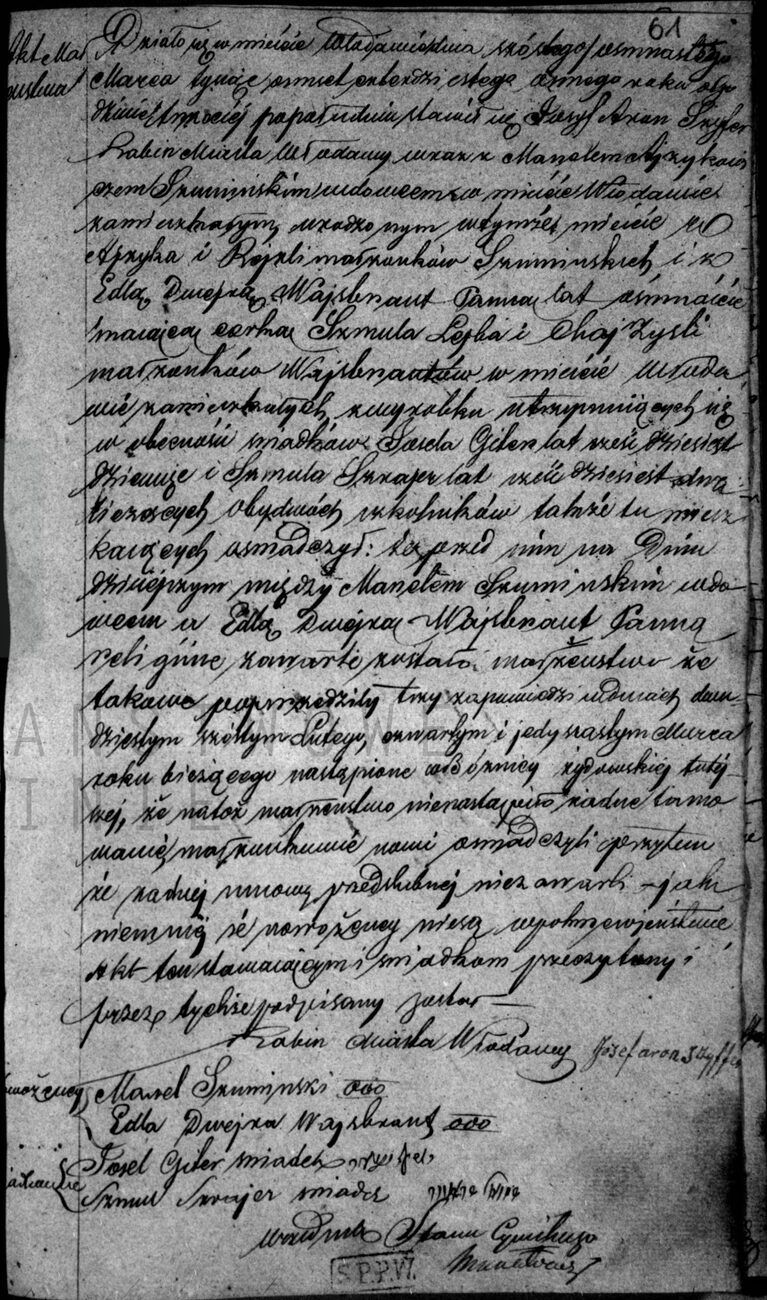
Manel (widower) m. Edla Dweyra Weisbrode; names Aizyk & Rejzla
High
S.S. Kursk manifest, 9 Jan 1913
Max's arrival, age 28 → b. 1885; "Wlodawo, Russia"
High
St. Albans border manifest, 1914
Gitte + three of the boys via Canada (Jack crossed separately); "Ruda, Chełm gub."; uncle Nankin
High
WWII draft card, 1942
Max b. 15 Feb 1885 — self-signed; supersedes posthumous "1883"
High
1950 U.S. Census, Milwaukee
Phillip born Poland (not Wisconsin)
High
Phillip's obituary, 1995
Survived by Helen & sons; brother Howard; Florida burial
High
"Timber merchant" legend
Disproven — Manel a day-laborer; no Szumiński in the wood-trade chapter
Retracted
1773 Włodawa census, AP Lublin z.86 sygn.3
Four men named Herszko/Hirszko, each with a different father — independently confirmed by two reads (vision + Transkribus Polish-M2 HTR)
Leads, unlinked
Patronymic search, Fond 1785 deaths 1826–36
Tested whether any of the 4 candidates' father-names recur on a later "Herszko" — none found in the free-searchable index
Negative
AGAD 1/358/0 unit 2733, 1792 estate inventory
Located, folio-mapped, sampled — 3 more Hersz-rooted men in Włodawa's Jewish register; no Ajzyk in the section read
New lead
Szuminka 1850 tavern-lease claim
Checked against its supposed source (Gawryszczak, Zeszyty Wiejskie 2011) — not actually in it
Retracted
Cousin's Nankin descendancy chart, 2006
Independently confirms Max m. Gitl Gertrude Nankin, d/o Aaron Urish Nankin — matches the tree exactly; extends the Milwaukee Nankin/Schneiderman family and firms up Ruda Huta as the birthplace cluster
High
Herszko's father, pre-1750
The frontier — unnamed; sought in Lithuanian poll-tax + estate inventories
Open
Max Schuminsky1885–1965 · names father Yitzchak Ayzik.Gertrude Nankinnée Nankin — HaKohen line.Jacob Finkel1853–1941 · son of Shneur.Harold Finkel1917–2002 · maternal grandfather.
FULL RESEARCH CORPUS: 220+ SESSIONS · 90+ FACT FILES · A SOURCE LOG OF EVERY ARCHIVE TOUCHED — MAINTAINED PRIVATELY.
Chapter VIII
Open mysteries
A living history. These are the questions still being worked, each with the next document identified.
1 · Who was Herszko's father? Leading candidate, 2026
The deepest documented man is still Herszko. The death registers that would name his father (1837–83) are lost. Włodawa was not in Crown Poland's Chełm Land — it belonged to the Grand Duchy of Lithuania, its kahał under Brześć — so the ladder back runs through the 1764/65 Lithuanian poll-tax and the Zamoyski/Czartoryski estate inventories, not Crown records. The 1773 Włodawa census (see Chapter II½) put four men named Herszko on the page for the first time — none yet linkable, and a targeted search for their patronymics recurring in later registers came back empty. A 1792 AGAD estate inventory adds three more Hersz-rooted names, and one has pulled ahead: Zelman Herszkowicz — explicitly recorded as a named son of a Herszko, and a documented property owner three times over: a masonry corner inn at the market square, his single most valuable holding; an adjoining plot with the foundations already started; and a house he'd sold to the Crown treasury before 1792, later converted into the town's customs house. His own household entry — the line that would carry an occupation and test whether he's a previously unknown brother of Ajzyk — still hasn't turned up, even after the named-household register was read essentially in full, both by eye and by handwriting-recognition software. What that full read did surface: Herszko and Zelman were both common given names in this community — six different men carried "Hersko" or "Herszko" as a first name or patronymic across the register's pages — which is exactly why the name alone keeps producing near-misses instead of a match. The Szuminka folwark inventory arrived and was read in full (46 scans, July 2026): it turned out to hold no list of arendarze or Jewish residents after all, but it did settle something else — Szuminka was a real, populated hamlet with its own manor farm and a named census of about twenty tenant families, none of them surnamed Szumiński or Herszko. What it also surfaced, unexpectedly: the village's liquor concession was administered through an unnamed "Ardarz Szuszeński" — the leaseholder of the neighboring Susno estate — and two of the four 1773-census Herszko candidates already held that exact kind of leaseholder post elsewhere in this same estate. If that unnamed office-holder can be identified and turns out to be Hirszko-rooted, it would be the first document to tie a Herszko-named man to a role over Szuminka itself. Three parallel tracks are live as of July 2026: the paleographer commission (Piotr, PolishOrigins) to verify the readings against the originals and locate Zelman's still-missing household line; a targeted query for the Susno leaseholder's name elsewhere in the same archive fond; and the Grand-Duchy ladder — the 1764/65 Lithuanian poll-tax, Brześć kahał district — on query with the National Historical Archives of Belarus, Minsk. The frontier hasn't moved, but it is now approached from three sides.
2 · The fourth son Narrowed
Narrowed again, 2026. Jack (b. 1904) crossed separately (S.S. Rochambeau, November 1914), so the three boys on the St. Albans sheet — read verbatim from the scan: Izrail 8, Schlioma 6, Faiwel 3 — don’t include him. Izrail is Sam to the day (born 10 March 1906, admitted 11 March 1914). The open fork: either Schlioma (b.~1908) is Phillip and Faiwel is the lost fourth son — or Faiwel is Phillip (Feivel→Phillip is the classic Yiddish–American pairing) and Schlioma is the boy who was lost. The Army’s enlistment file locks Phillip’s birth year at 1909, and border clerks understated children’s ages far more often than they overstated them — which tilts the reading toward Faiwel = Phillip, and Schlioma, b.~1907–08, as the boy the family lost. The family appears in no indexed 1920 census at all — and a 2026 line-by-line read of enumeration districts 277, 289 (the Muskego frontage) and all 39 pages of 290 found the street but never the family — house 1010 falls in a gap between the enumerators’ walking routes, which is why a century of indexes missed them. EDs 277, 289 and 290 have now been read in full — the family is in none of them; the likeliest truth is that the January 1920 enumerator simply missed the household, as happened to non-English-speaking families. The Schlioma question now rests on the Milwaukee death record, 1914–22. No burial index has surfaced the lost boy — Agudas Achim’s first interment came only in 1923, so the search moves to Second Home, Beth Hamedrosh Hagodel, and the Jewish Museum Milwaukee’s Death & Burial Index. One document settles it: the 1920 census sheet, or the boy’s Milwaukee death record, 1914–22.
3 · Where in Russia were the Finkels? Solved
Jacob Finkel's hometown was recorded everywhere in the American record as just "Russia." It broke on his own 1902 Ellis Island manifest — column 10, in the clerk's hand: "Scharogrod," the standard German-clerk spelling of Sharhorod, a major Podolia shtetl (now Vinnytsia Oblast, Ukraine). The same document adds a fact the family record never had: Jacob's trade was cabinet maker. Still open, lower priority now: his 28 June 1941 Omaha World-Herald obituary, page 14, which may independently corroborate the town.
4 · Ruda Solved
The family's last old-country address wasn't Włodawa town — the 1914 manifest reads Ruda, Chełm gubernia, now identified as gmina Ruda-Huta, about 30 km south of Włodawa. The Szumińskis had moved from town to countryside before they emigrated.
5 · The Chełm Nankins Narrowed 2026
A Nankin survivor family from Chełm reached the records — Izrael (b.1907), Gitla, and their children, plus Chuna (b.1897). Their parents (Fiszel, Hersz, Lejwa) don't match Gertrude's father Aaron Urish — so not her siblings directly. The test set was: did Aaron Urish have a brother named Lejwa or Fiszel? A 2026 family descendancy chart answers half of it — yes, a brother Fishel Nankin (b.~1860, Chełm) is confirmed, with his own line running partly to Mexico City. Whether the Chełm survivor family descends from this specific Fishel, rather than a same-named cousin, is still the open piece.
6 · The shoe store's name Found
Resolved from a primary source: Max's 1942 draft card names his business Hi-Mount Shoe Co. (self-employed, retail), at 5717 W. North Avenue — the same address on Phillip's own 1940 card. The city directories add the earlier chain: shoe repairer at 967 Grant St. by 1915, then Muskego Avenue through the 1920s. "1369 8th Avenue," the address family memory has long carried, doesn't appear in any directory checked 1915–1927 — real to the family, just not yet placed in the record.
The Keeper of This Record
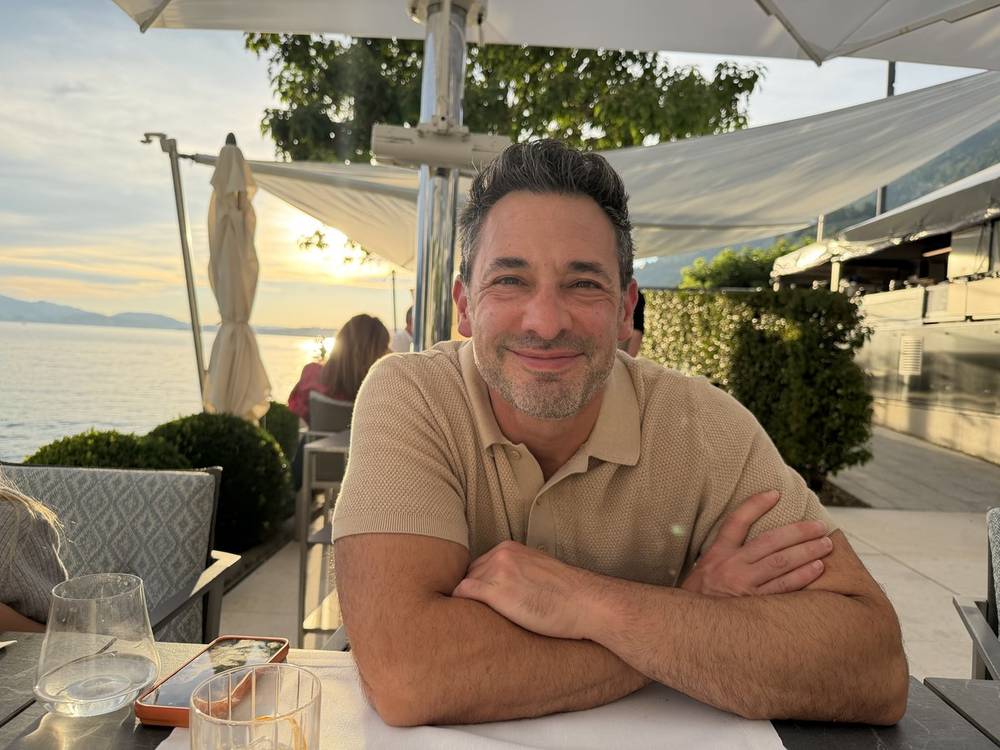
Jay Matthew Schuminsky was born 25 November 1980 at Cedars-Sinai in Los Angeles — son of Mike and Leslie, four generations removed from a shoemaker who arrived with nothing. He married Jayme Tolan on 1 September 2016, in Santa Barbara, and together they're raising the family's newest branch: Jaxon, Olive, and Finn. He took over the family business at 30, five and a half months before his own 31st birthday, after Mike died suddenly on 10 March 2011 — a company much smaller than what came after, run since on the same instinct that put Max on a boat in 1913 and Mike into wigs and land in the 1970s: find the opportunity, work it by hand, keep the family close. This site is his own research, built document by document through 2026, so his kids and everyone after them would have the paper trail, not just the stories.
An All Storage EZ Drive Thru — Mike's own invention (pull in, load, exit the other side), still the design his son builds on.
×
SCHUMINSKY
Family Heritage — private
Hint: the Santa Monica address Frank Gehry reshaped — Mike's building, still ours.